Richland County has made many significant contributions in the shaping of American popular culture by giving form to our movies, our music and our theater. Watch the credits or take a look backstage and you’ll find folks who grew up in Mansfield giving voice to history by tuning the heartstrings of their generation.
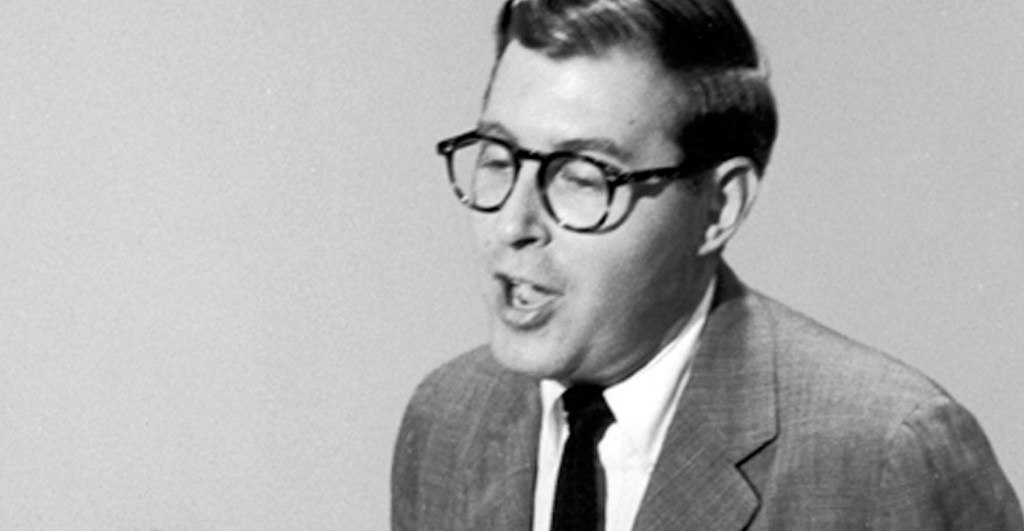
One of these artists is Lee Adams. He was born at Mansfield General, graduated from Senior High, and went on to write lyrics for songs that became American standards from Broadway musicals that defined their eras.

Pushing the Envelope
His work came during a time of dramatic upheaval, in the 1960s and ’70s, and some of the cutting edge emotion of his words gave heart to the music and soul of the time. In 1964, when the Civil Rights movement was gaining traction, he collaborated to create a Broadway hit show for Sammy Davis Jr. called Golden Boy, that had the star singing, Who do you fight/ When you want to break out/ But your skin is your cage.
When Dr. Martin Luther King Jr. came to see the play he said he most admired the rousing anthem in Act Two called No More: music by Charles Strouse, lyrics by Lee Adams.

One of the biggest songs of the show was No More, a phrase Lee Adams always uttered at the end of each show as he collapsed. Within a month or so he was always at it again, however.
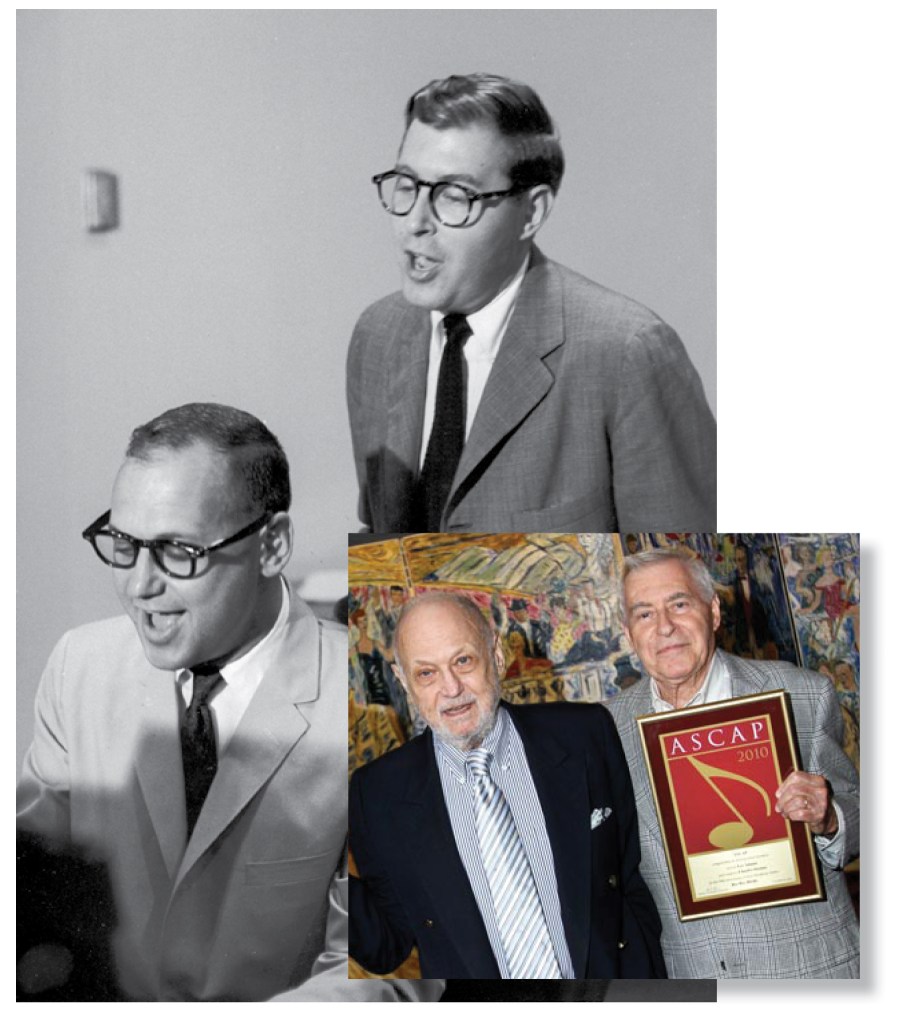
He is seen above on the left on opening night in 1964.
Ticket to the Theater
So what was it about growing up in Mansfield that could prepare Lee Adams to write a moving chorale to encourage Black activists? At first glance, nothing at all—he was not particularly interested in music or theater growing up. He studied journalism at OSU and Columbia, and intended to have a career writing copy for magazines and television.
Along the way he became captivated by the art of words, and fascinated with the sculpture of language, and the poetry of abbreviating thoughts and passions into short phrases for singing. “The lyrics are good,” he said, “if you can make a picture in the listener’s mind—a little snapshot in words.”
While working at a New York magazine in the early 1950s, he met composer Charles Strouse and the two of them started honing their collaborative art, putting together words and music, in summer stock revues, off-Broadway musicals and nightclub acts.
By 1957, he was presented with an idea for a musical about young people, so in his spare time, on stationary borrowed from This Week magazine, he knocked together the core of what would prove to be a revolutionary play done in shades of rock and roll that was an enormous hit. Bye Bye Birdie ran for a year and a half on Broadway and then went to television and feature film.
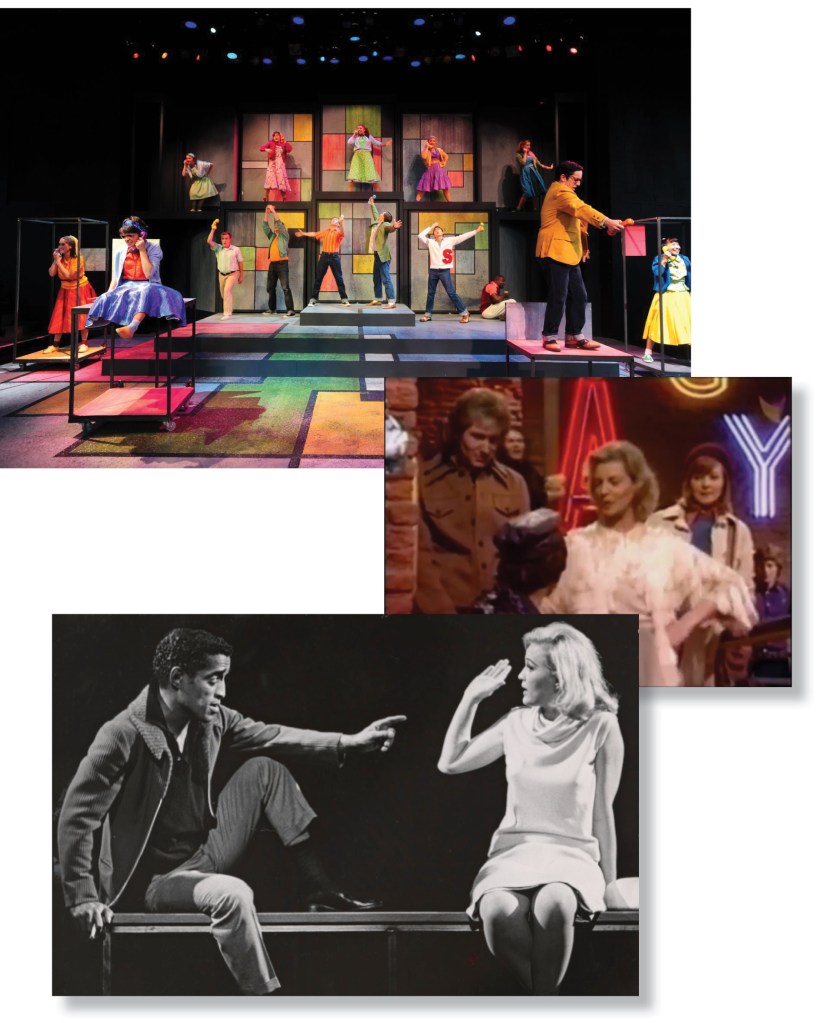
In 1960 it was bringing Rock & Roll to the legitimate stage in Bye Bye Birdie (top), in 1970 there was an edgy dance scene in a gay bar for Applause with Lauren Bacall (center), in 1964 there was a controversial Black & White relationship for Sammy Davis Jr. in Golden Boy (bottom).
Words From the Heart
This traces the route he took to get to the Theater, but it doesn’t explain how he happened to find himself expressing the intimate spirit and voicing the struggle of American minorities. For that element of the story you need to know a little more about growing up in Mansfield in the 1930s.
In many interviews through the years for magazines and documentaries, Lee has often said, “I grew up in a small Midwestern town—a Norman Rockwell kind of mid-American town called Mansfield, Ohio.” What he didn’t elaborate about Mansfield and the ’30s is that his father was a well-known doctor in town whose public spirit brought him and his family to the highest level of culture, yet his Jewish heritage precluded the family from taking part in the society organizations of their peers. Lee wasn’t allowed to be a member of the dancing club along with his classmates.
He wouldn’t have to look any farther than his own soul to find the lyrics, How I needed love but you closed the door/ Oh you’ll laugh at me no more.
Curtain Call
Golden Boy was controversial in several ways, and it aroused considerable hostility during a volatile year in history, but it was a Broadway success and ran for 568 performances. In 1970, Adams helped create the musical Applause for Lauren Bacall that won four Tony Awards and ran for 896 shows. But by far the biggest success of his career came in 1960 when he wrote the words for Bye Bye Birdie, a show that is still one of the most performed musicals in high schools across the nation.
How do you measure the success of a song? For Lee it was the day he walked into his apartment building in New York and could hear the janitor down the hall singing to himself, Put On a Happy Face.
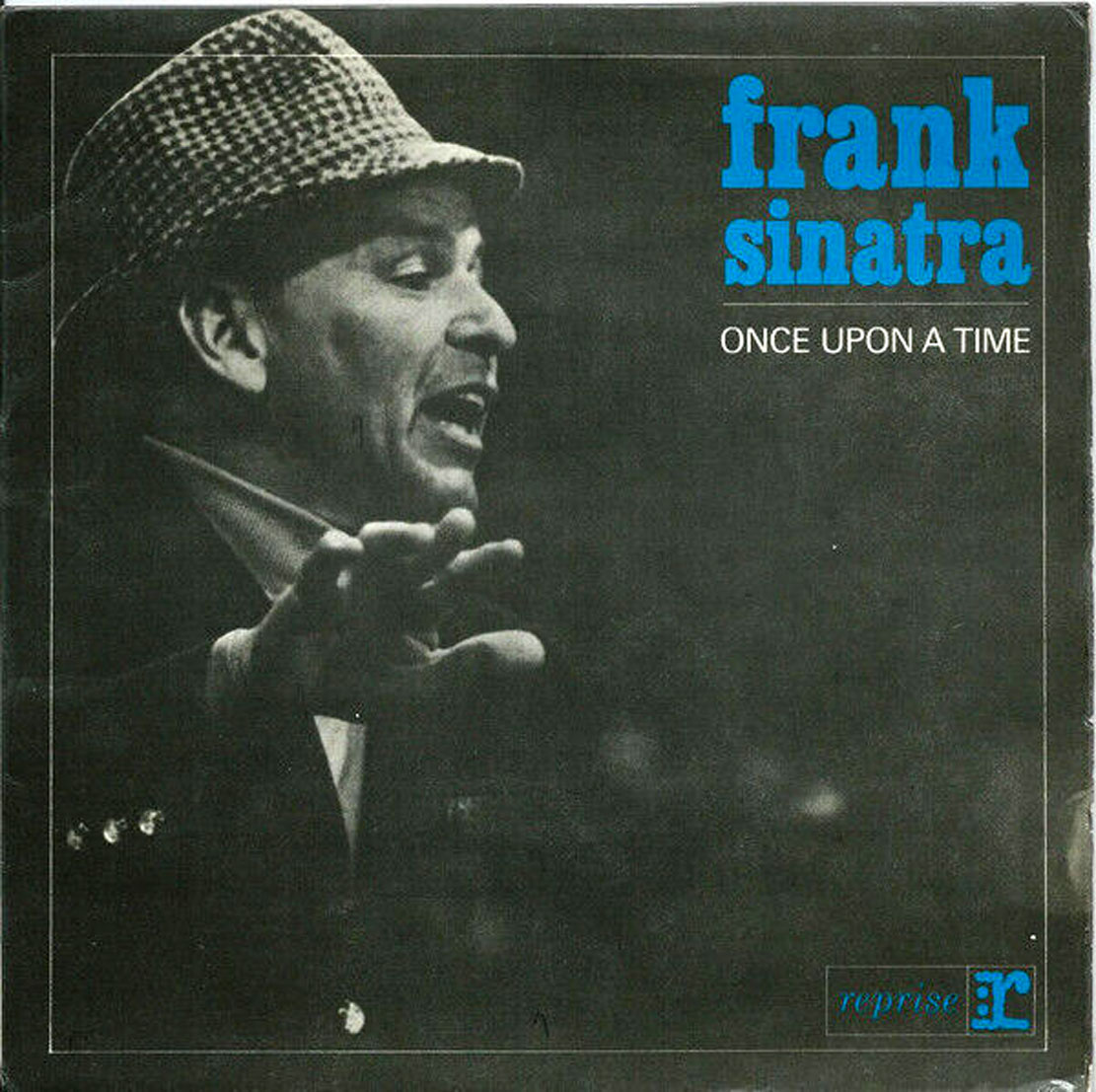
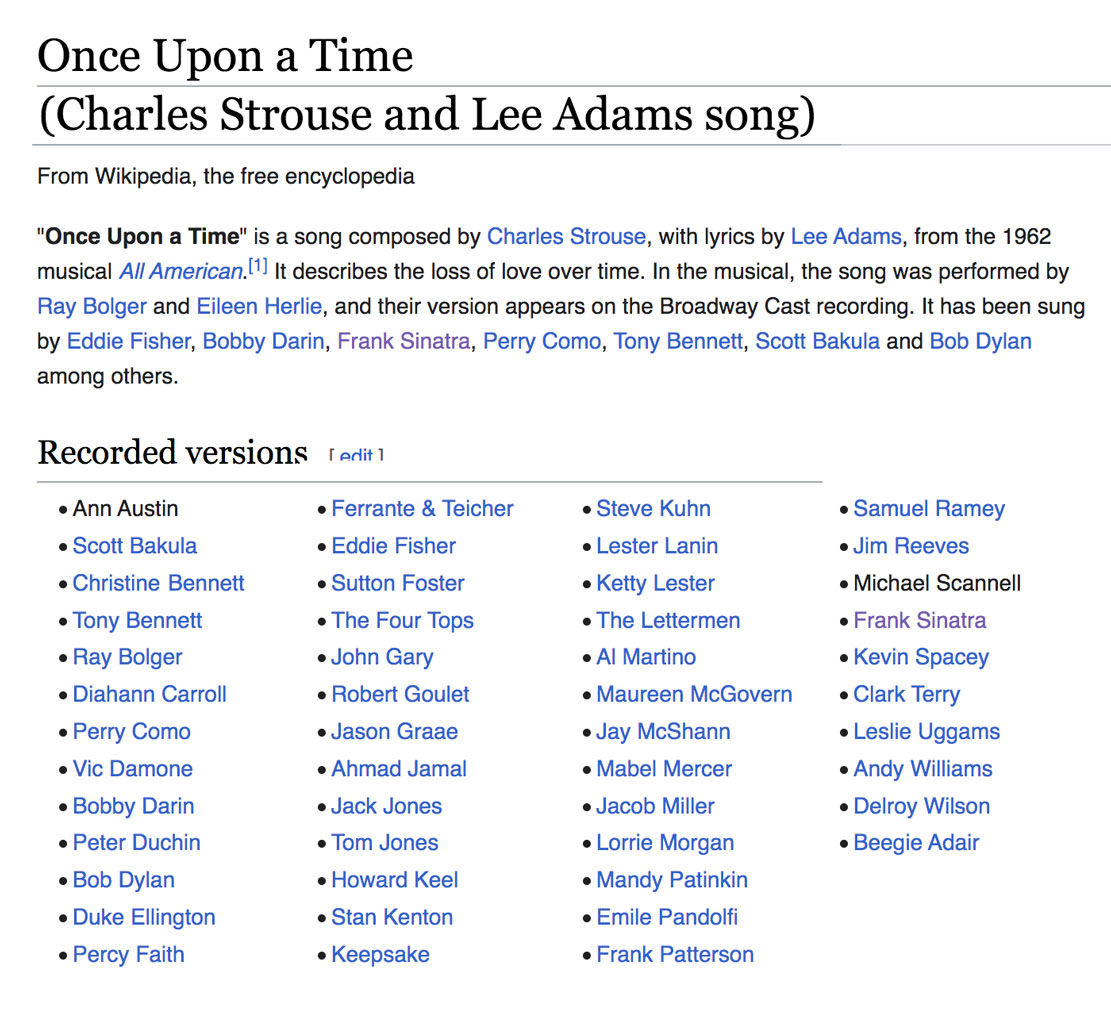
When songs become standards in American culture, they are recorded by many different artists: and a song like Adams’ Once Upon a Time was on the radio and cut on vinyl by popular stars from Bobby Darin to Frank Sinatra. When songs become so embedded in the soul of a generation that you might hear anybody on the street singing it, then the words truly come from the heart of us all. That song is Put On a Happy Face, and it expresses the sunny big-hearted legacy of a local boy whose words still have the nation singing along.
(Listen and watch Tony Bennett and James Taylor singing the words of Lee Adams.)
Lyrics of Night Song from Golden Boy, by Charles Strouse and Lee Adams; No More from Golden Boy, by Charles Strouse and Lee Adams.
Post Script:
Lee Adams, who grew up on Woodhill Road, won Tony and Emmy Awards for his work co-writing songs for Broadway Musicals in the 1960s and ‘70s, and saw his songs recorded by a myriad of the greatest performers of his era.
Adams & Strouse are well known in musical theater history, but what is less known about them is what I find most interesting:
The two young men were drawn to each other through their love of songwriting, but had no particular background in theater and had to learn the business from the ground up. They spent a summer at a camp in the mountains as entertainers for the tourists, where they had to write a new show every week and new songs every day. It was in this high-pressure, low expectation laboratory where the alchemy of their talent transmuted their enthusiasm into the art that spoke to their generation.
Later on they wrote hundreds of memorable songs.
However, the two songs of theirs that resounded most influentially into the American repertoire—Put on a Happy Face, and Once Upon a Time—did not come from their mature, cultured, adult and developed skills. Both of those songs were ‘throwaway songs’ for their summer tourist productions.
They were each dashed off in a few minutes by a couple of improvising young guys having fun.
 Richland County History