
In North Lake Park, there is a prominent knoll near the Fourth Street entrance that is today covered simply in grass. But time and history in our town have seen that knoll covered deep in memories of past generations so sweet and melodious and filled with good times that the hill itself must still hum somewhere deep in its bedrock with the very joy of our community.
Places on our planet destined for laughter, optimism and well-being seem to have an irrepressible vortex of energy that circles the ground in a whirlwind of enthusiasm. In one generation at the park, that racing exhilaration followed the tracks of a roller coaster going round and round the top of the hill. In other generations—for most of the 20th century—that circle of dynamic spirit was traced on the globe by hundreds of thousands of roller skates.
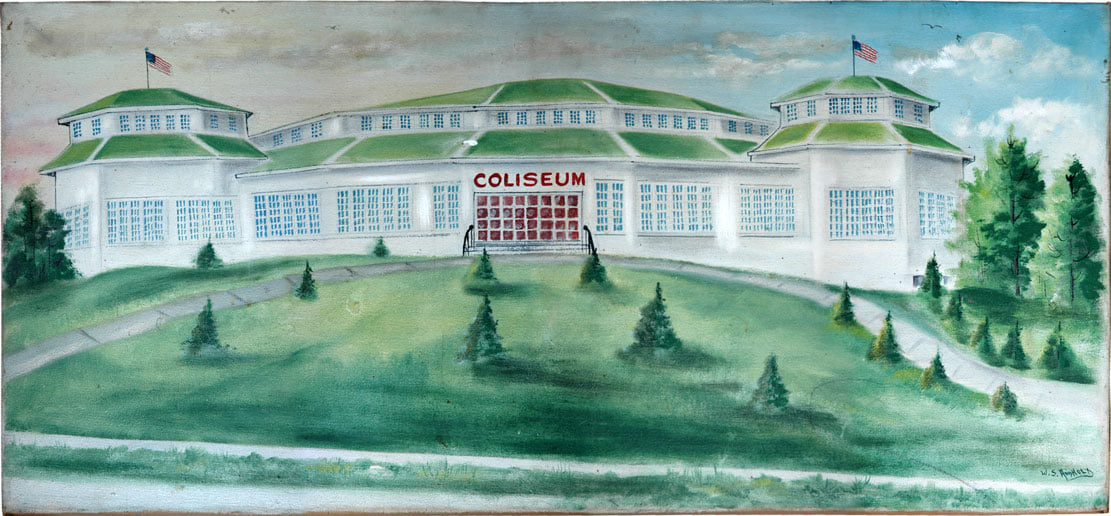
This essay in photos documents the various forms of entertainment and delight that took breath in different decades of North Lake Park’s past, and the buildings that stood to contain those warm feelings on the site of the Coliseum.

Let the Good Times Roll
The story of the Coliseum begins with elm wood—which is to say the wood of elm trees. That is what they used to lay the floor of the dance hall built on the lake knoll in 1904. Accordingly, Elmwood Pavilion is what they called it—the most popular, the largest and by far the most hopping joint in town. Later, Elmwood became the name of the little access lane leading to the Pavilion.
A year after it opened, the whole building was picked up and moved a few dozen yards south so the knoll could be repurposed for a new and more dynamic form of entertainment—the Luna Park roller coaster.


This particular image is scanned from a postcard belonging to a woman who was a daughter of the businessman who built the dancing establishment, the roller coaster, and the Coliseum. Look closely at the man on the right and above his head you’ll see where she proudly indicated her father: Rupert Cox.

This 1913 photo gives appropriate prominence to the park knoll where all of the Coliseum history took place.
Rolling Along
The White Maple promoted Dance Night on Tuesdays, Thursdays, and Saturdays with a variety of local military bands and dance orchestras. During the daylight hours they opened their floor to the hottest rage sweeping the nation: roller skating.
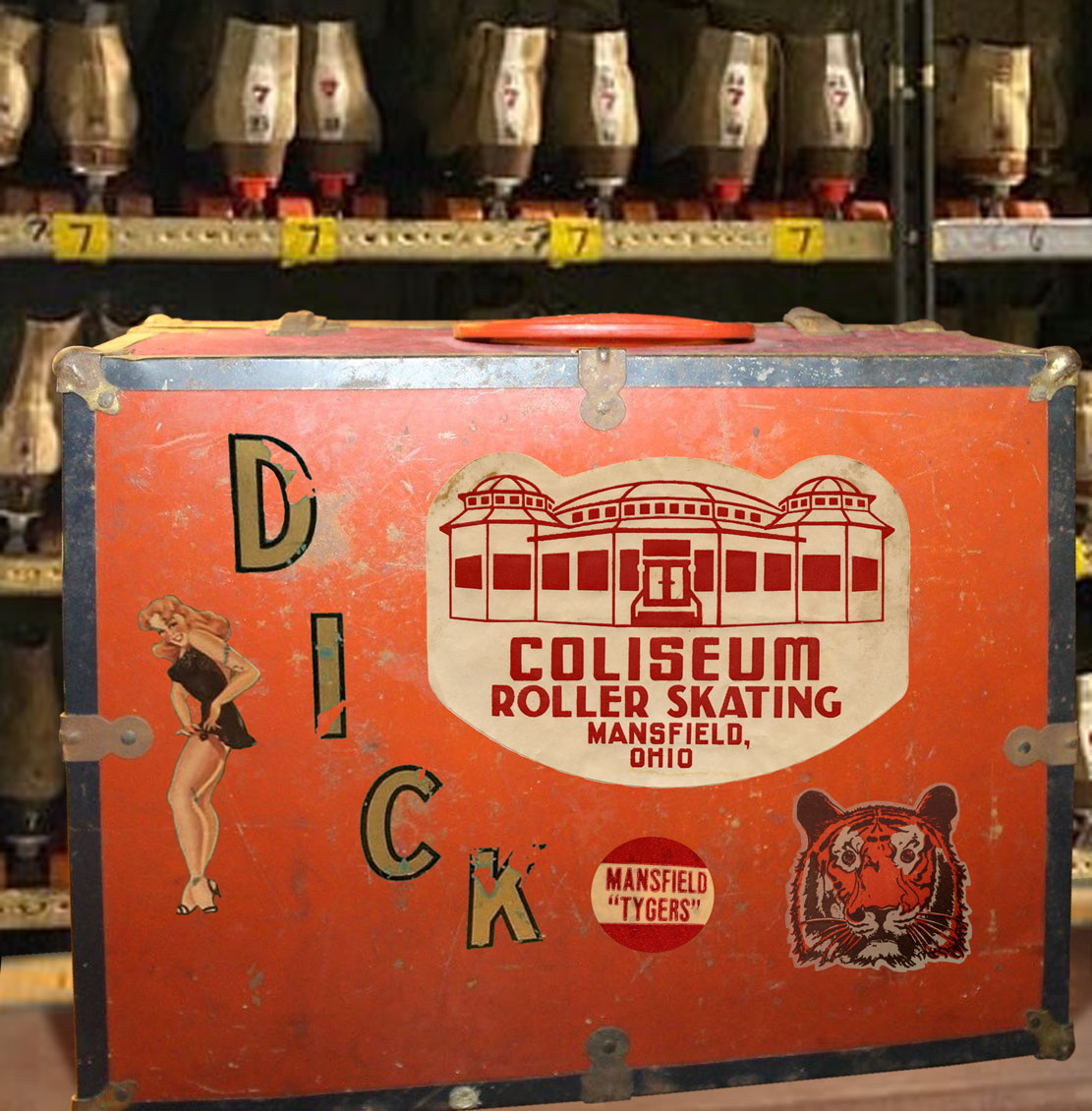
In 1921, when the place burned down, the Mansfield News was quick to note that among the ashes were 500 pairs of rental roller skates.
The very night of the fire, the pavilion’s owner—Rupert Cox—assured the dancing public that he had plans to rebuild. In fact, within days he advertised for sale all the materials comprising the roller coaster because his creative new scheme involved the prominent knoll where the coaster stood.
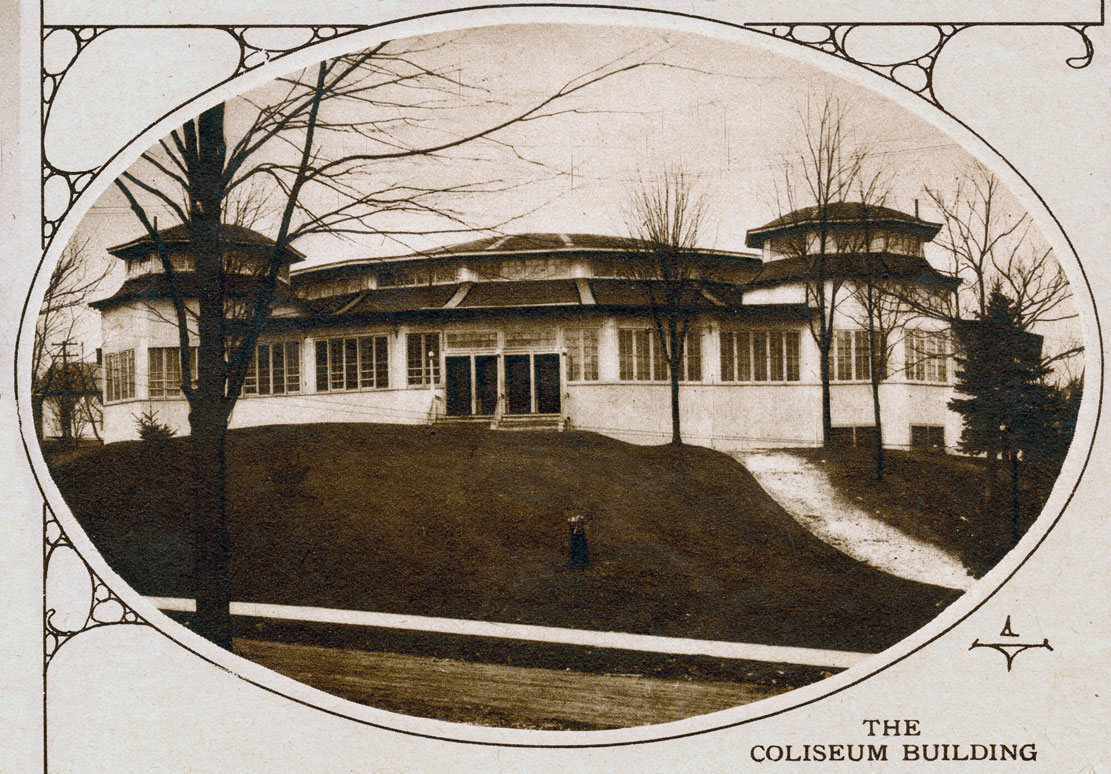
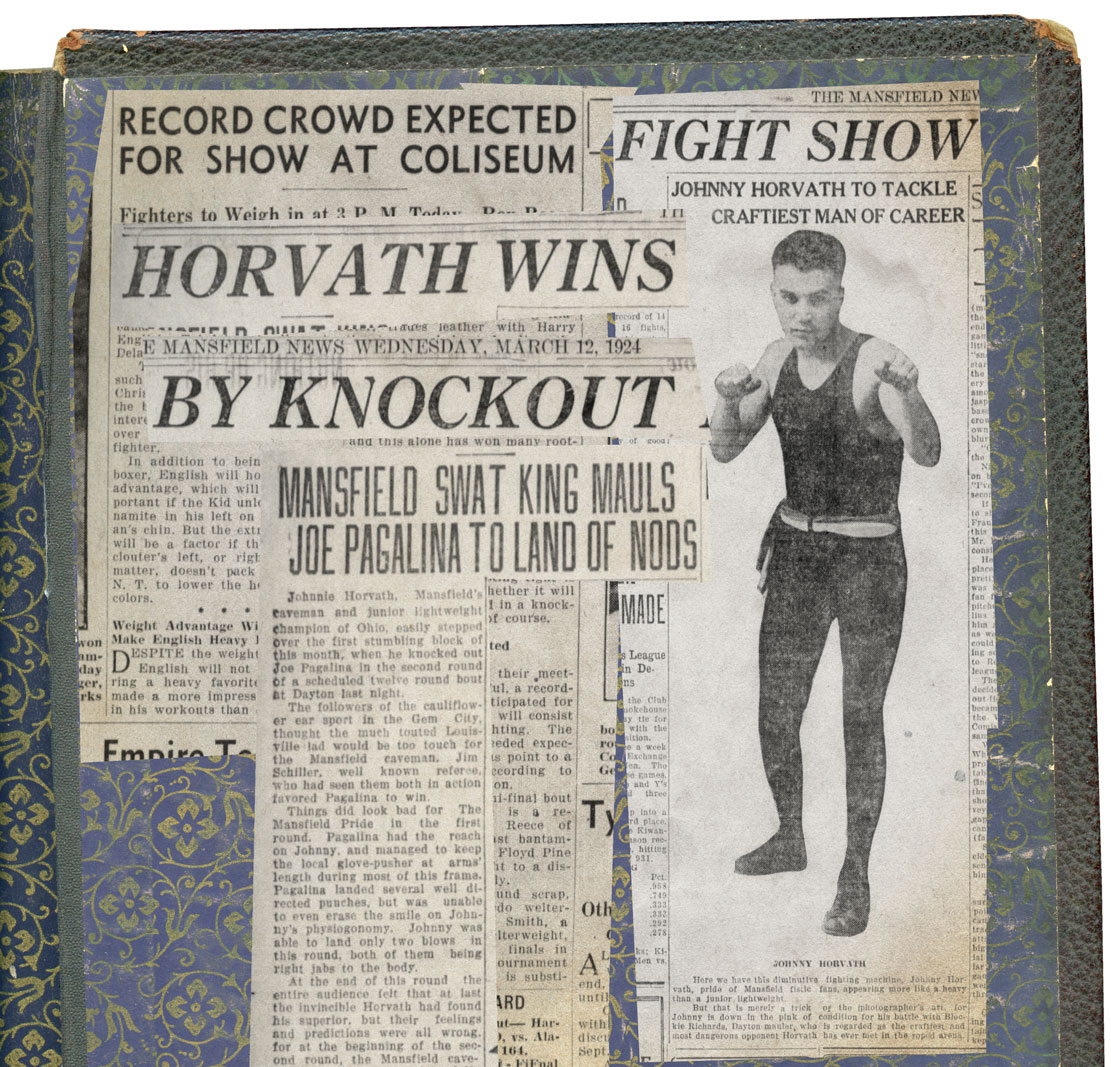
Cox had a clear vision of a center that was to become an essential aspect of Mansfield society and culture. The city had nothing like a civic hall, so he pictured something large enough to encompass more than merely dancing: his grand pavilion would host automobile shows, cooking and flower expos, indoor circuses and minstrel shows, as well as sporting events like basketball.
And, of course, the most popular sport of all: roller skating.
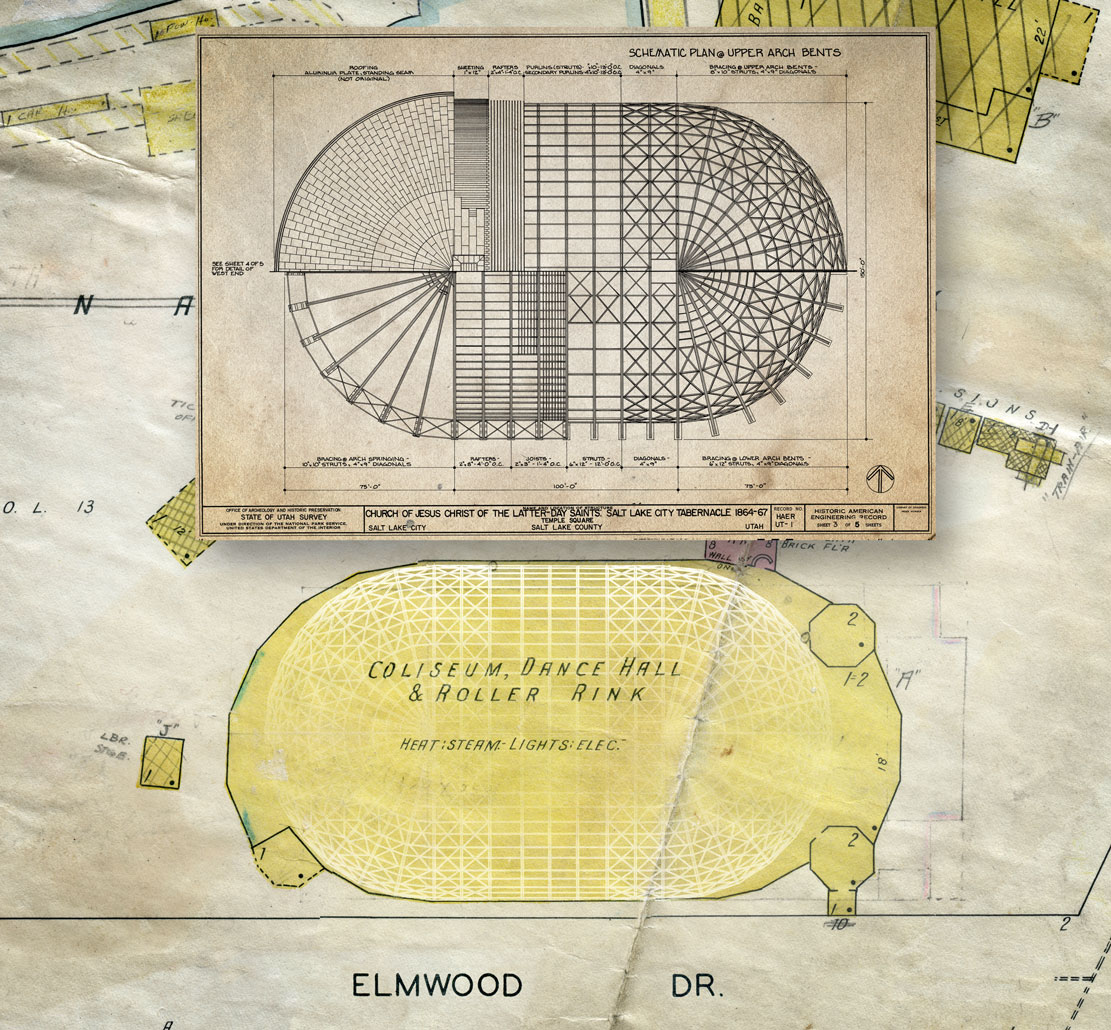
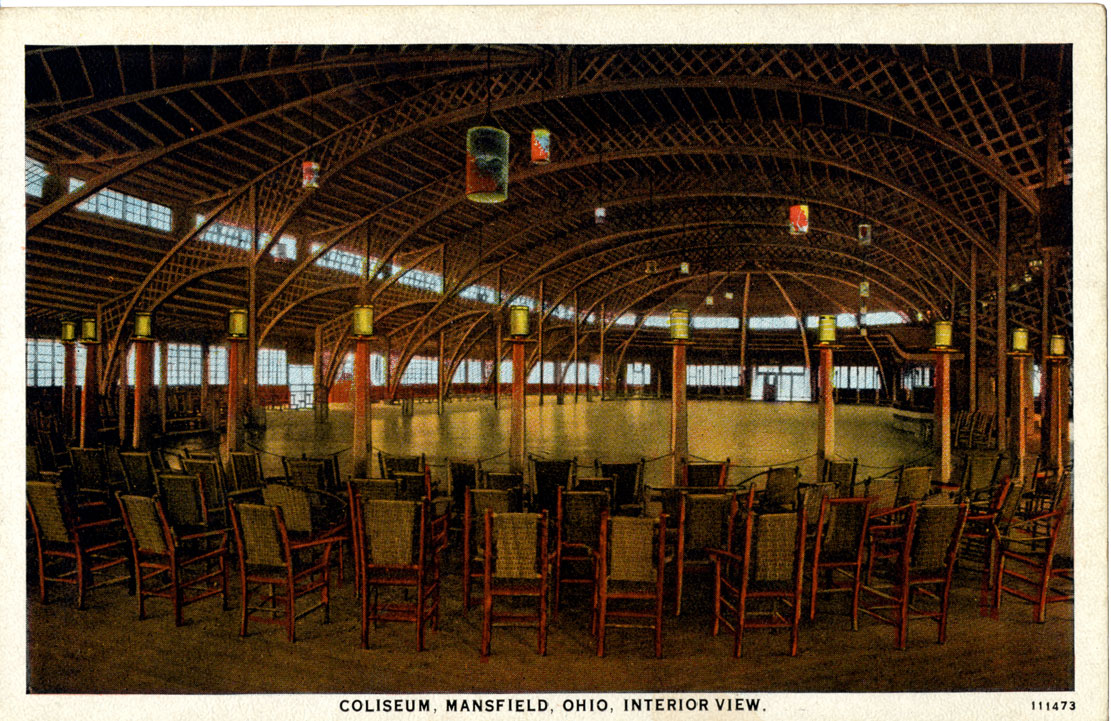
Cox wanted a place with such perfect acoustics that “an eight-piece orchestra would perfectly fill the room.” So, he modeled his hall on the one place in America known for its unbelievably acute acoustics: the Mormon Tabernacle in Salt Lake City.
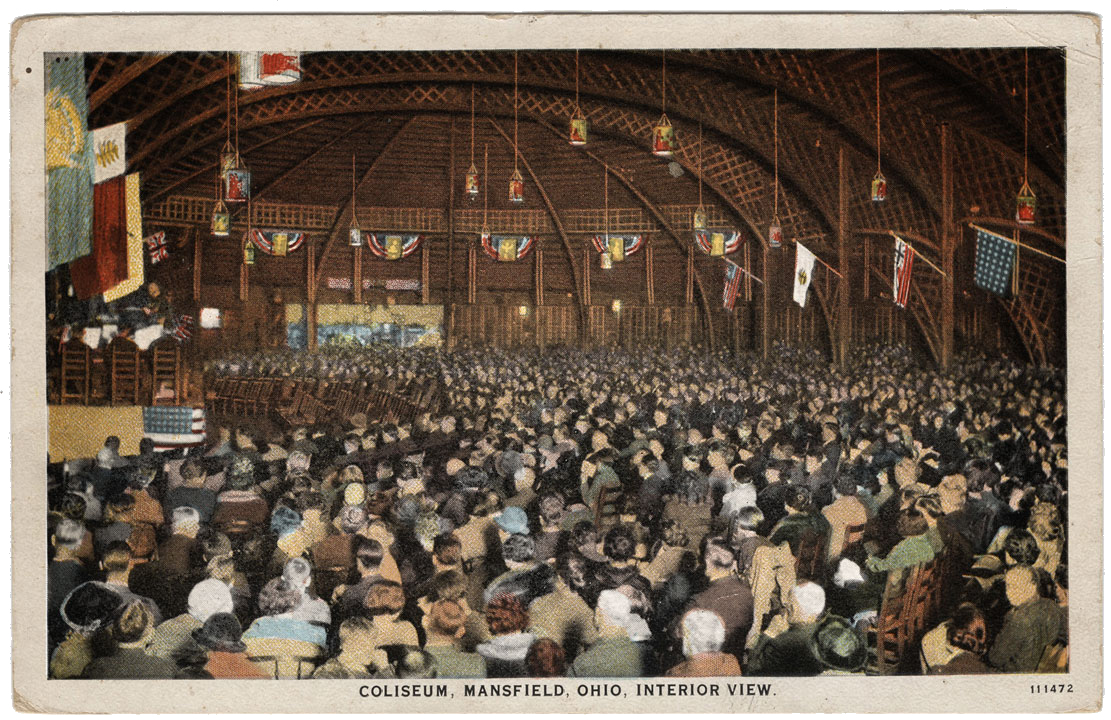

The event formally began every year with the “Grand March,” which was a massive promenade of everyone in attendance. All of the funds raised were allocated for “ammunition.”
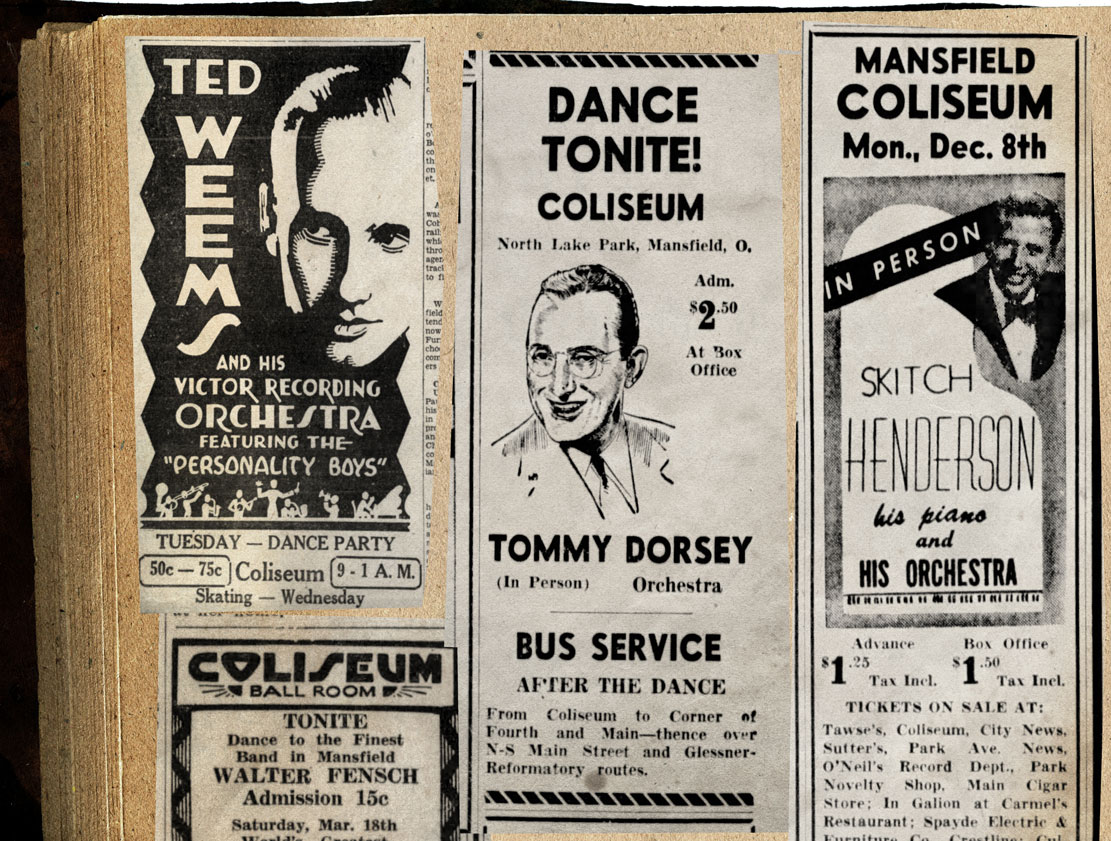

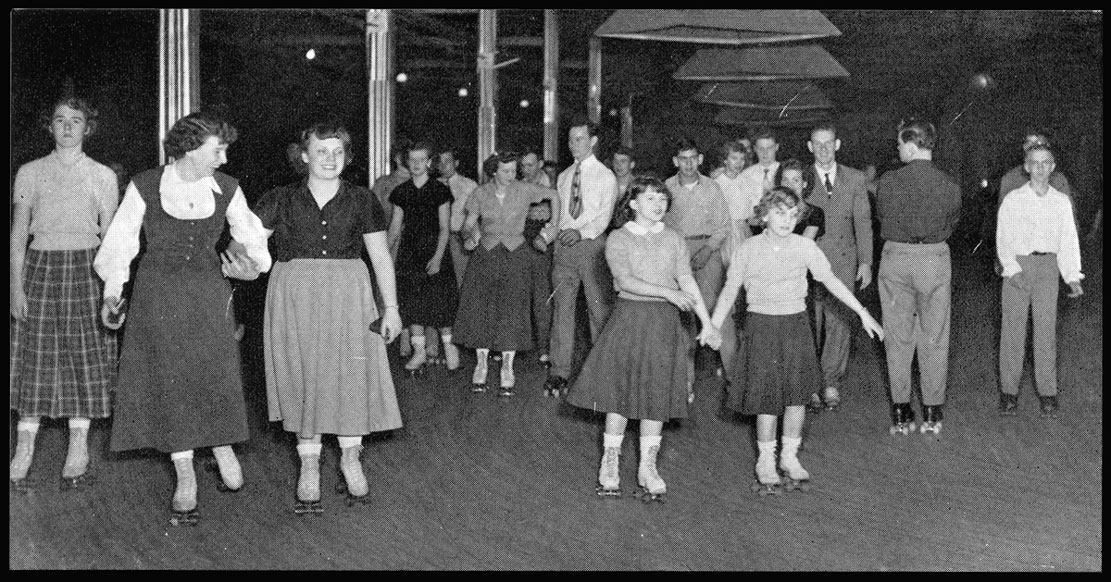

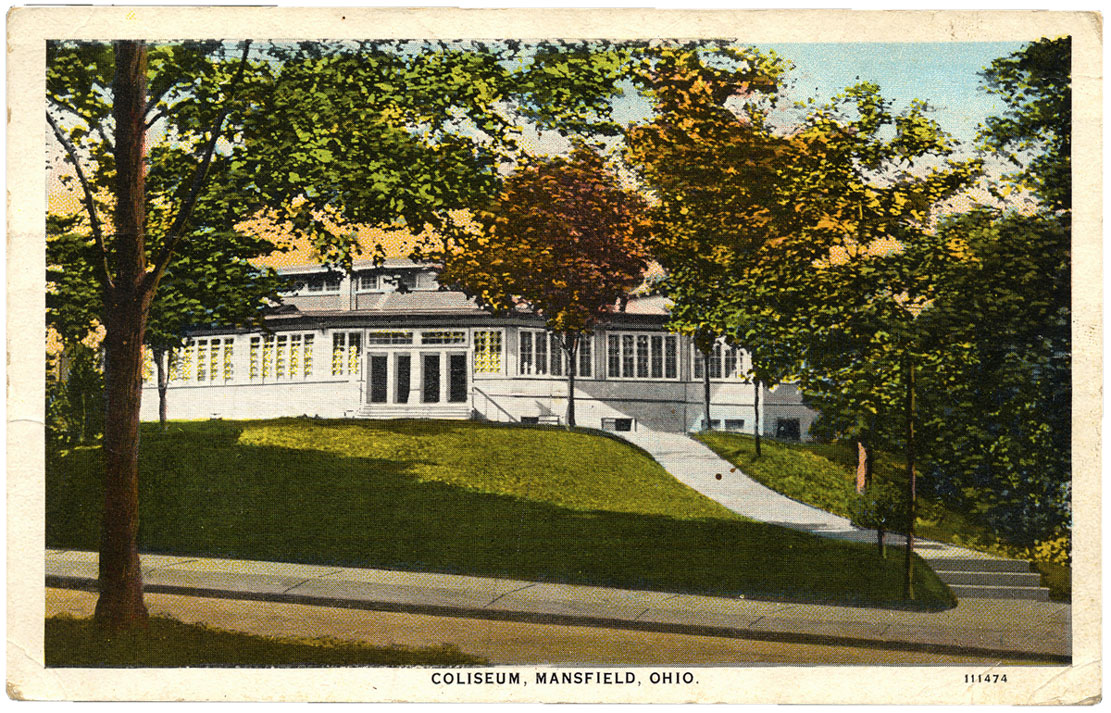
By then, there had been two full generations of Mansfielders giving the place a heartbeat.
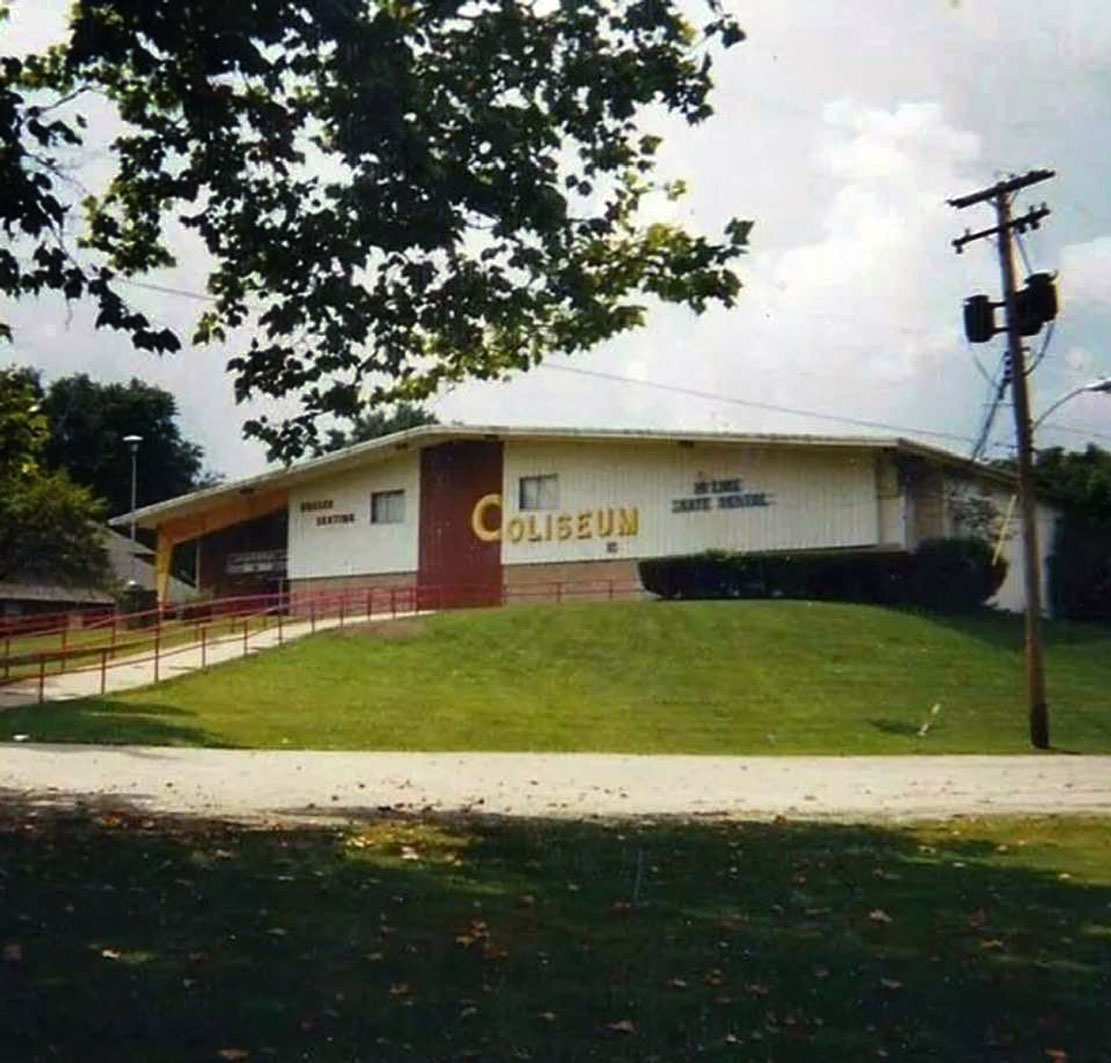
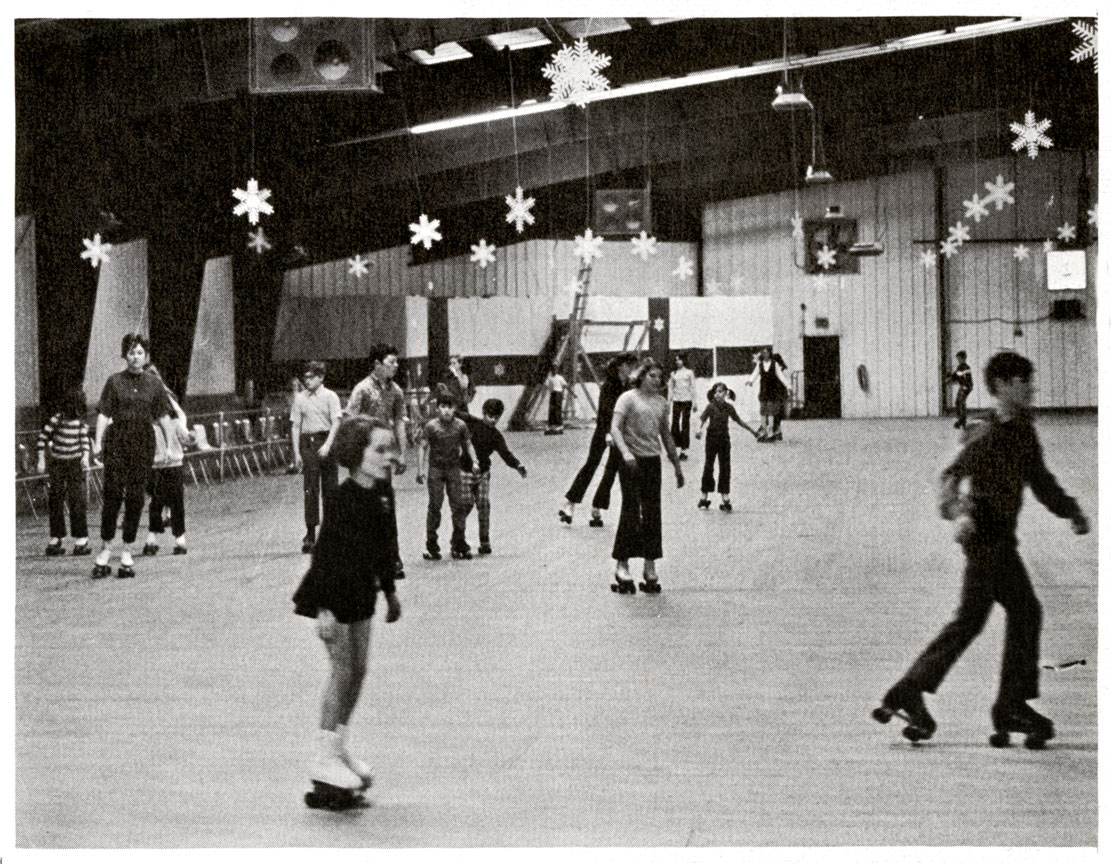
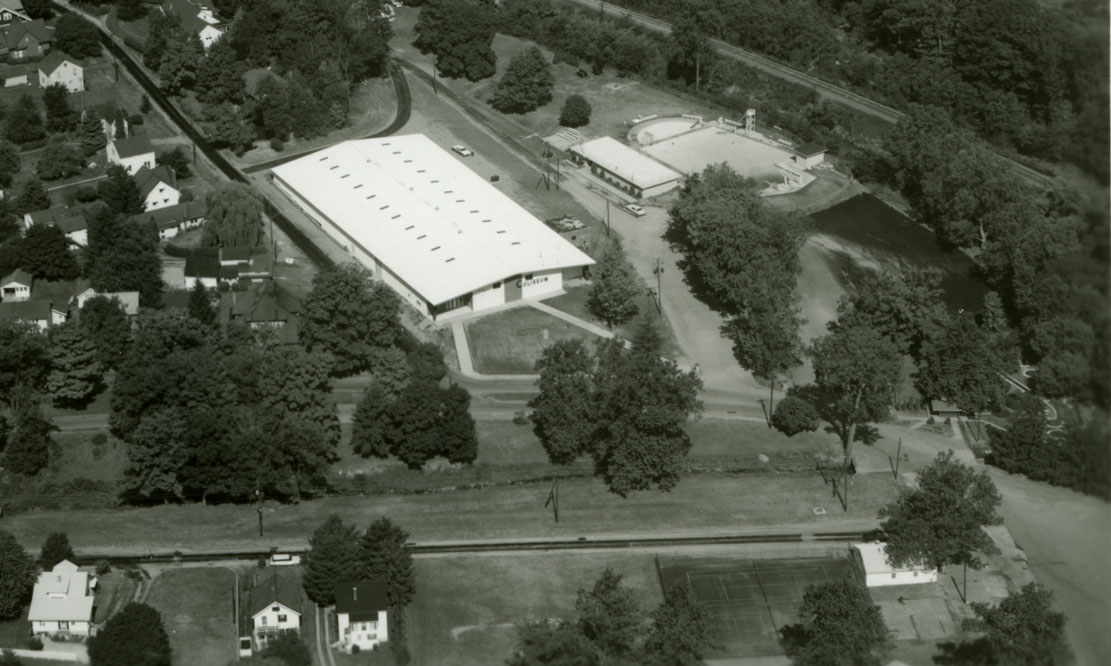

For two whole generations of Mansfield kids and parents, this was the Coliseum they knew from 1967 until 2005, when the place caught fire in the night and all of that nice pinewood turned to charcoal.

E Pluribus Roll ’em
Skating at the Coliseum was Mansfield’s first successful experiment in societal equality: liberty and justice for all. The place was joyful all the time no matter who was there—and they all were there. People of every variable in America.
There were folks of all ages skating at the Coliseum, and they were from all the neighborhoods in town, people you would never run into anywhere else in town. Sometimes literally run into.
Smiling at strangers, strangers helping one another stay on their feet. Strangers from other schools, from other churches, from entirely different frames of reference.
It was an introduction to the most truly universal community most of us ever experienced. A sense of what the world is supposed to be. Joined with strangers in fun.
Plus, after a couple hours of rolling around on those skates there was a kind of rumbling hum that remained in the soles of your feet that made life a little lighter, for a while, released from the strict dictates of gravity and feeling the rest of the day as a giddy kind of dance.
Thank You
Images in this article come from the collections of Emily Beard-Herrick, Phil Stoodt, The Sherman Room of Mansfield/Richland County Public Library, Jeff Sprang, Tom Root, Vic Day and Anne Sabri, Mark Hertzler, Richland County Chapter Ohio Genealogical Society, Hal McCuen, and probably a few other people I have never met.
Post Script:
According to the date stamp on the photo file, that was on March 18. Exactly 46 days later the Coliseum burned again.
I have always figured that if it ever rises again on that knoll for another go-round, I will have this photo transferred onto a canvas so it can hang in the new place.
 Richland County History
Very cool to see my grandfather’s band—Walt Fensch and His Ambassadors—in the photo with the other swing bands. I started a blog about the Ambassadors almost two decades ago. Take a look at some Mansfield history! https://waltfensch.blogspot.com/
LikeLike