When Louis Bromfield changed his residence from France to the USA in 1938, he was regarded as one of the best known and highest paid writers in the world; but the day he changed his mailing address to Pleasant Valley marked the watershed moment when—in his own mind—he stopped being an American novelist and started being an American Farmer.
From that day on, his writing served primarily to make it possible to develop Malabar Farm.
He was 43 years old when he came to Malabar Farm and he died at 59. But what he accomplished during those few years was far more than a life’s work.
After living as an expatriate for thirteen years, Bromfield’s return happened to correspond with the most life-threatening agricultural catastrophe in American history. When he stepped off the ship in 1938, he found his nation in crisis after a decade of epic droughts and dust storms were decimating the vital basis of our human food chain. The very soil underfoot was washing away, and with it was going America’s health, economic stability, and cultural well-being.
Bromfield was one person in a unique position to do something about this disaster. His career as a writer had made him a familiar name to readers and movie-goers of the 1930s, giving him a rare influence in popular culture. And it happened that the first love of his life had always been farming.
So when he went to Ohio and started a farm on worn-out, soil-depleted fields, his progress of restoring fertility brought hope to the nation, and provided a prototype plan of recovery to hundreds of thousands of farmers across the land.
This photo essay documents that critical time in history when Bromfield’s legacy transformed from that of fictional story teller to real-life healer of a wounded nation.
The Native
This illustration from the endpages of Bromfield’s 1945 book, Pleasant Valley, gives an accurate sense of his initial concept of returning to the land: romantic, nostalgic, and with the slight unreality of a storybook painting.
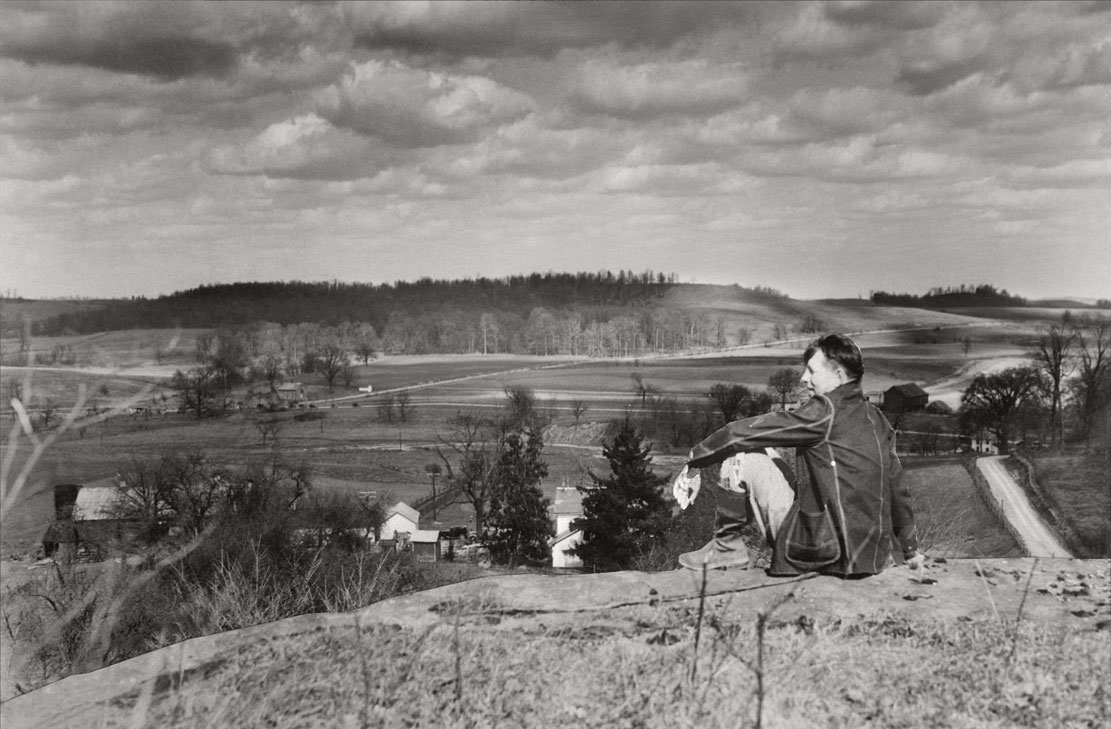
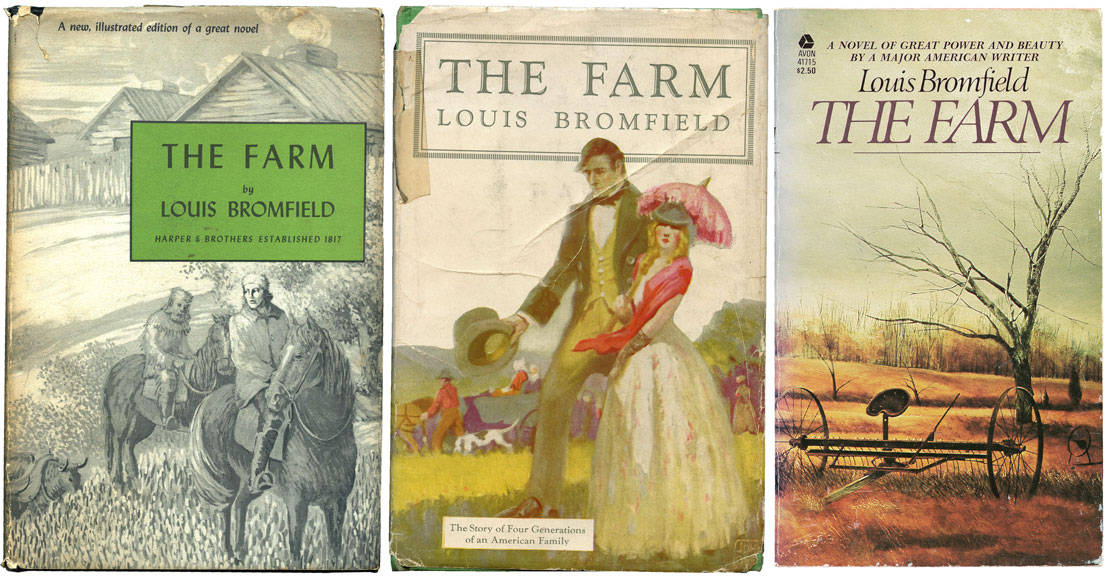
This house he built in the valley was a clear reminiscence of his Grandfather’s farm, as an evocation of the kind of life he intended to recreate from his youth in the early 1900s.This is a postcard Bromfield had printed to use for correspondence with his friends around the world to announce his excitement at reestablishing his Richland County roots. A careful examination of the image reveals two separate photos combined to create the illusion of Louis on an overlook that does not actually exist.The type of farm to which Bromfield wanted to return can be understood by reading his 1933 novel, The Farm. As is evident from these various cover illustrations for the book, his novel focuses on historical perspectives of farming in the 1800s.
He was hoping to recreate in 1940s America a self-sufficient farm from his Grandfather’s day, when everything they ate on The Farm, with the exception of salt and coffee, was grown on the property.
The volatile American economy of the 1930s Great Depression made this idealized return to the past seem like an essential solution for survival.
The Activist
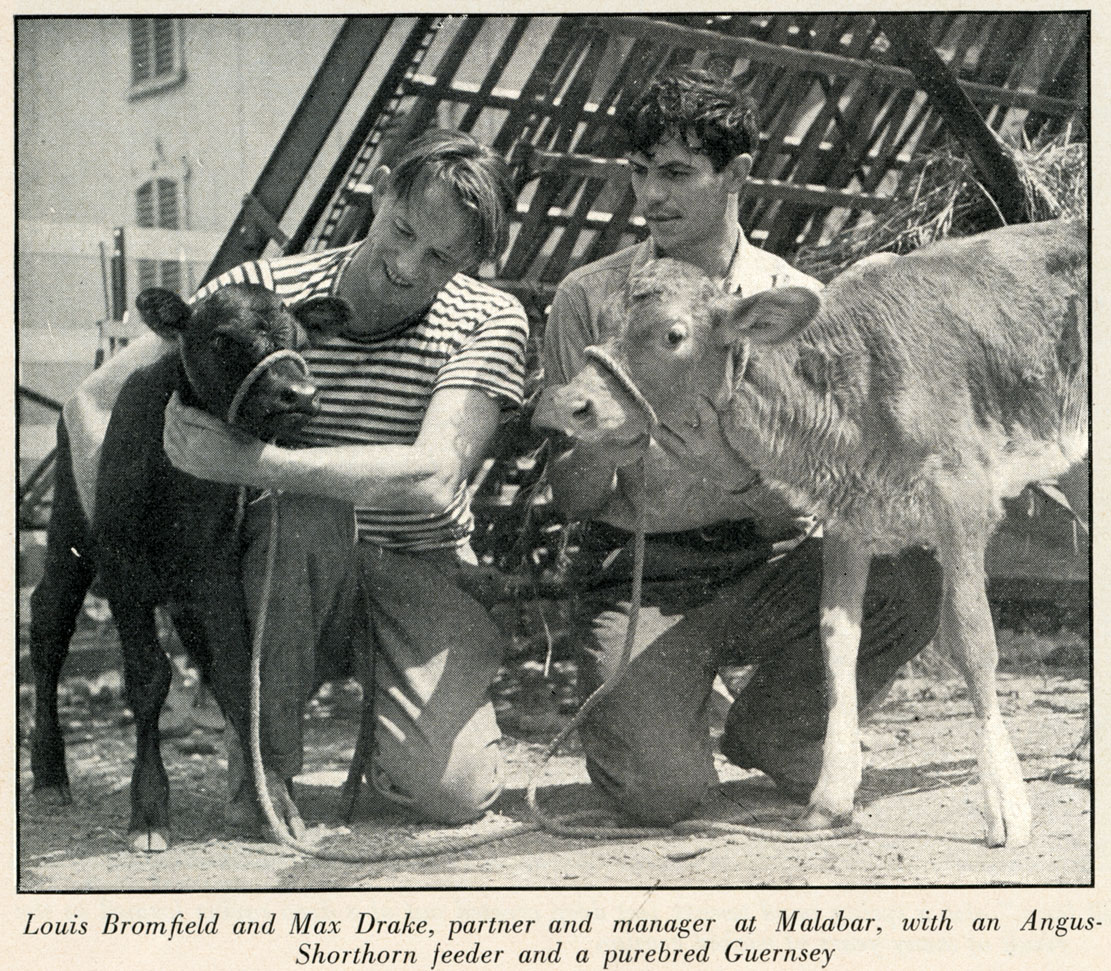
Bromfield’s approach to farming at Malabar Farm was devised with the assistance of Max Drake, a young man skilled and experienced with current 20th century agricultural practices.
It didn’t take long before Bromfield’s talk of a self-sufficient undertaking was jettisoned from their Plan as being wholly unrealistic.
The focus of their work became, rather, to address their worn-out and nearly barren fields so as to restore fertility using the ‘New Agriculture.’A great deal of the ‘New Agriculture’ of the 1940s was actually very old agriculture which had been ignored by generations of American farmers because of the seemingly endless abundance of fertile soil on the continent. Various age-old means of conserving and rebuilding U.S. croplands didn’t seem necessary until the 1930s when the topsoil was finally depleted of nutrients, and washing away.
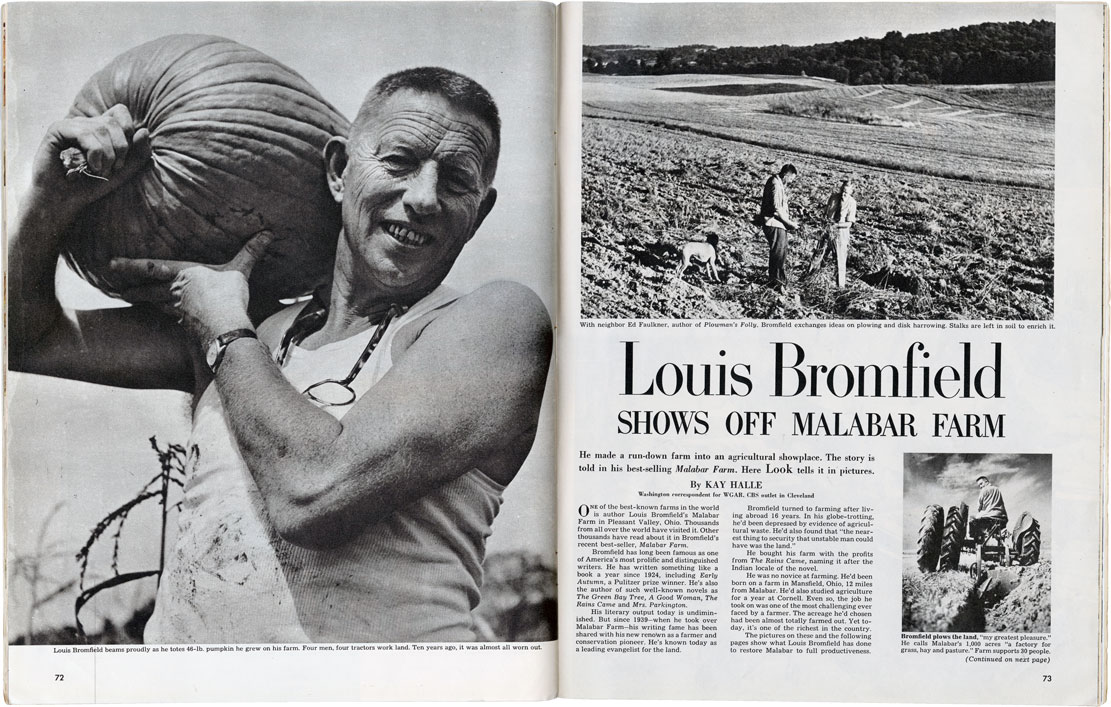
Among the ‘new’ methods of treating cropland that Bromfield practiced and promoted was Contour Planting to keep dirt from rinsing away in the rain, as seen here along Pleasant Valley Road.It was Bromfield’s unique celebrity status in the 1930s and ‘40s that enabled him to get information out to farmers at that critical moment of history. There were, of course, thousands of Agricultural Agents around the nation urging farmers to protect the soil, but high-profile articles like this 1949 Look Magazine made Bromfield’s endorsement reach millions of readers, to promote conservation far more than any Government project.Bromfield had media appeal and access unlike anyone else in Agriculture of his day to drive home his message. Life Magazine delivered Farmer Bromfield into hundreds of thousands of homes, this Saturday Evening Post featured his infomercial: “I Live On the Edge of Paradise,” and Reader’s Digest put Bromfield’s “We Will Not Have Enough to Eat” into the hands of folks in offices, railroad stations, commuter rails, and waiting rooms all across the country. This is a modest sampling of the media saturation he achieved.The cause of Soil Conservation propelled Bromfield’s words into print for everyone from children to tractor salesmen.A large part of Bromfield’s impact in 20th century agriculture came because his advice in print was clearly backed by personal, practical experience, and Malabar Farm was his proof.
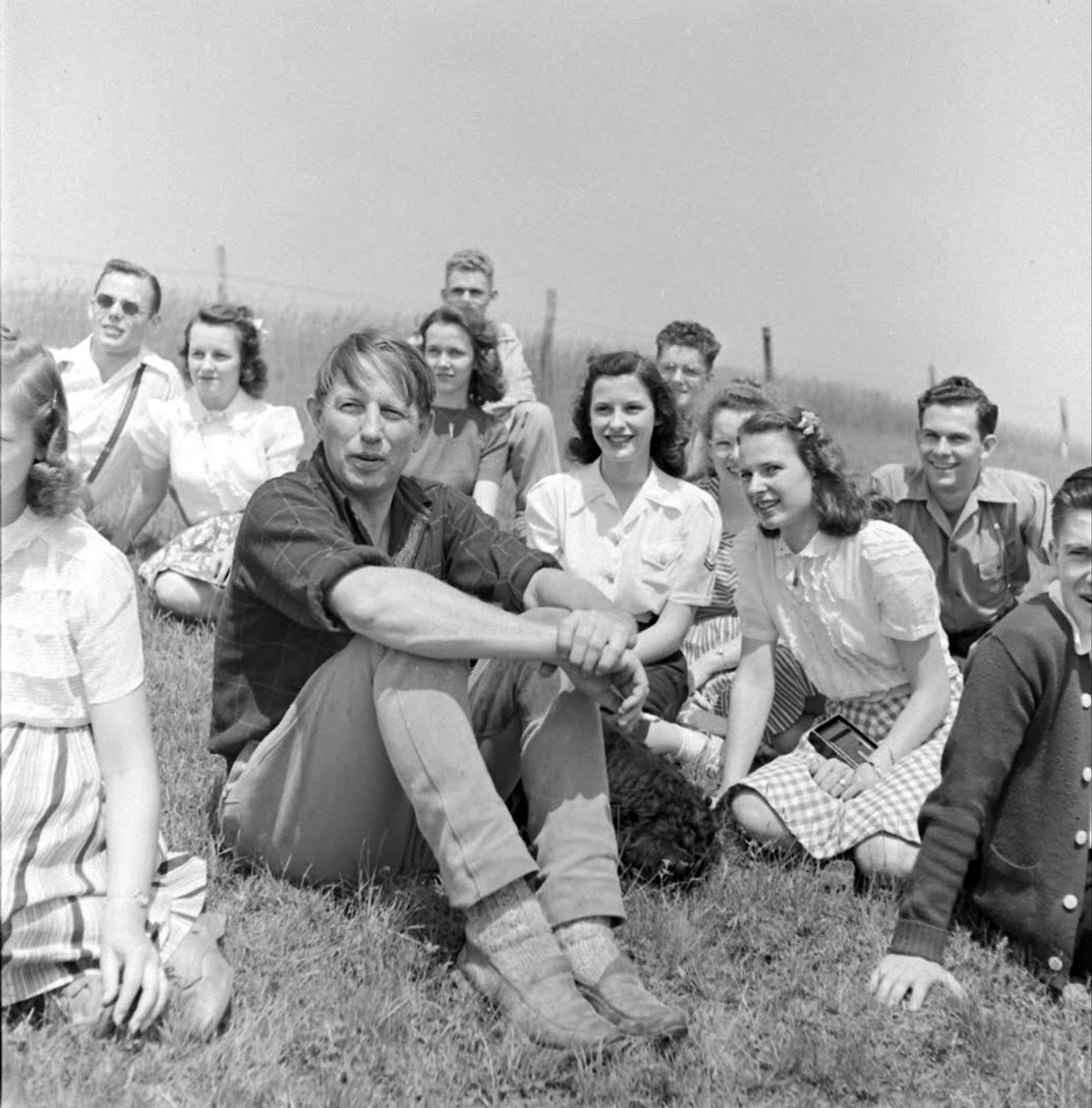
In total dedication to that end, Bromfield literally welcomed everyone interested in his efforts to visit his ‘Demonstration Farm’ to see for themselves. He gave personal tours and answered questions to educate untold thousands of visitors from all over the world.
There were actually scheduled tour times on Fridays and Sundays in the 1940s, and it was from these educational strolls that one of Malabar’s iconic landmarks got its name: when someone asked George Hawkins where they could find Louis, he pointed to the highest scenic hill overlooking the farm and said, “He’s up there delivering his Sermon on Mount.”
It was Hawkins who began calling it Mt. Jeez. This photo from the top of Mt. Jeez gives an idea of how the U.S. Government embraced the hospitality of Malabar Farm with an event in 1950 for Senator Taft, who arranged to have Bromfield testify before Congress. It was well known in political circles that if Dewey had defeated Truman in the 1948 election, Bromfield would have been named to the President’s Cabinet as Secretary of Agriculture.It was important to Bromfield’s message that his Conservation practices be easily accomplished by any farmer on any farm of any scale. Yet, the scale of expansion and entertainment at Malabar Farm was such that it could hardly have existed without the auxiliary income he derived from his popular novels.
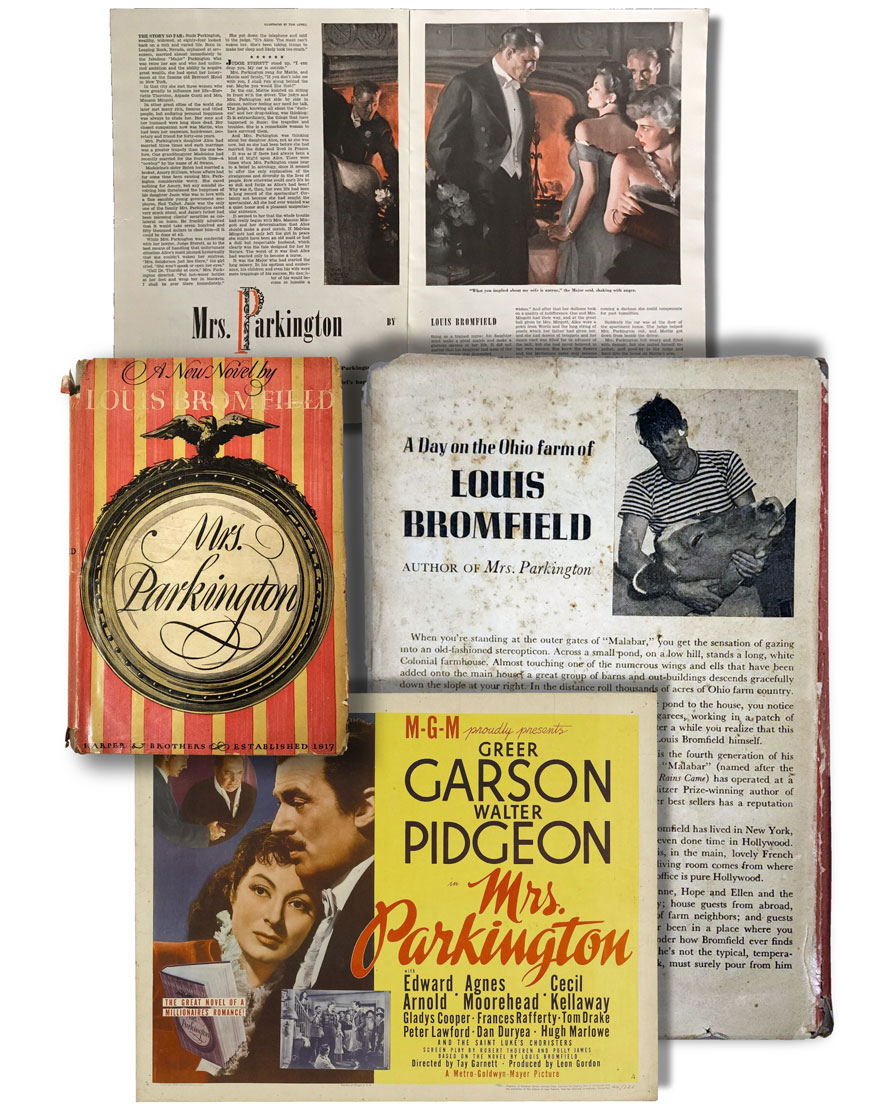
As an example, in 1944 he sold the movie rights for Mrs. Parkington before he wrote more than an outline. The book was then serialized in Cosmopolitan Magazine, published by Harper Brothers, made into a hit movie, and sold to foreign publishers for a massive harvest of royalties.
From the time he moved to Pleasant Valley, his book sales—including Mrs. Parkington, Night in Bombay, Wild Is the River, and Colorado, sold more than 5.5 million copies.
That kind of money made a lot of hay.
The Farmer
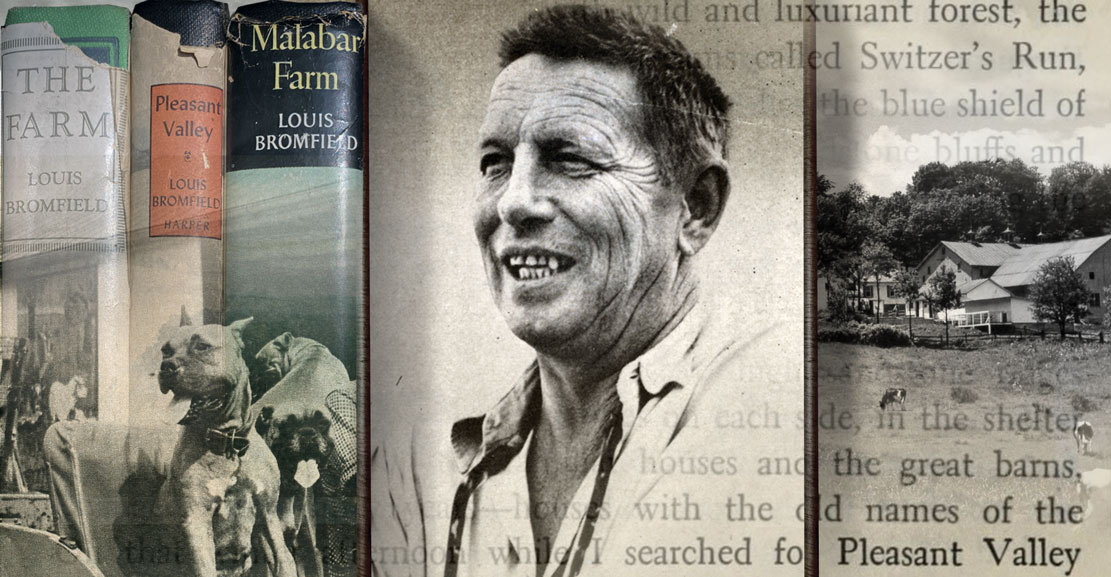
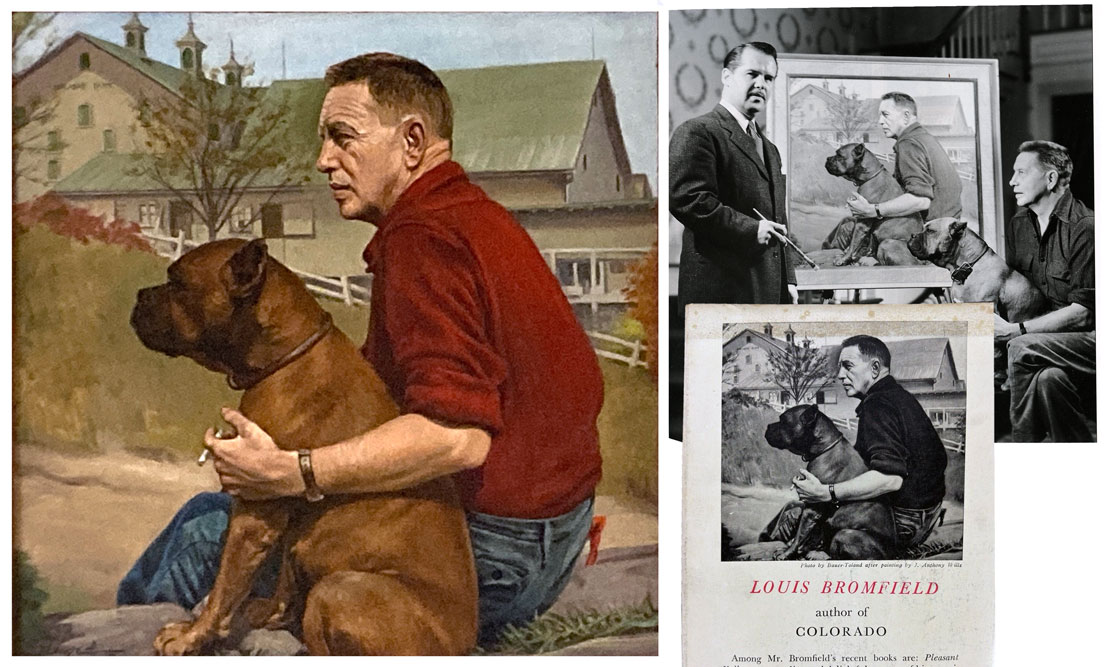
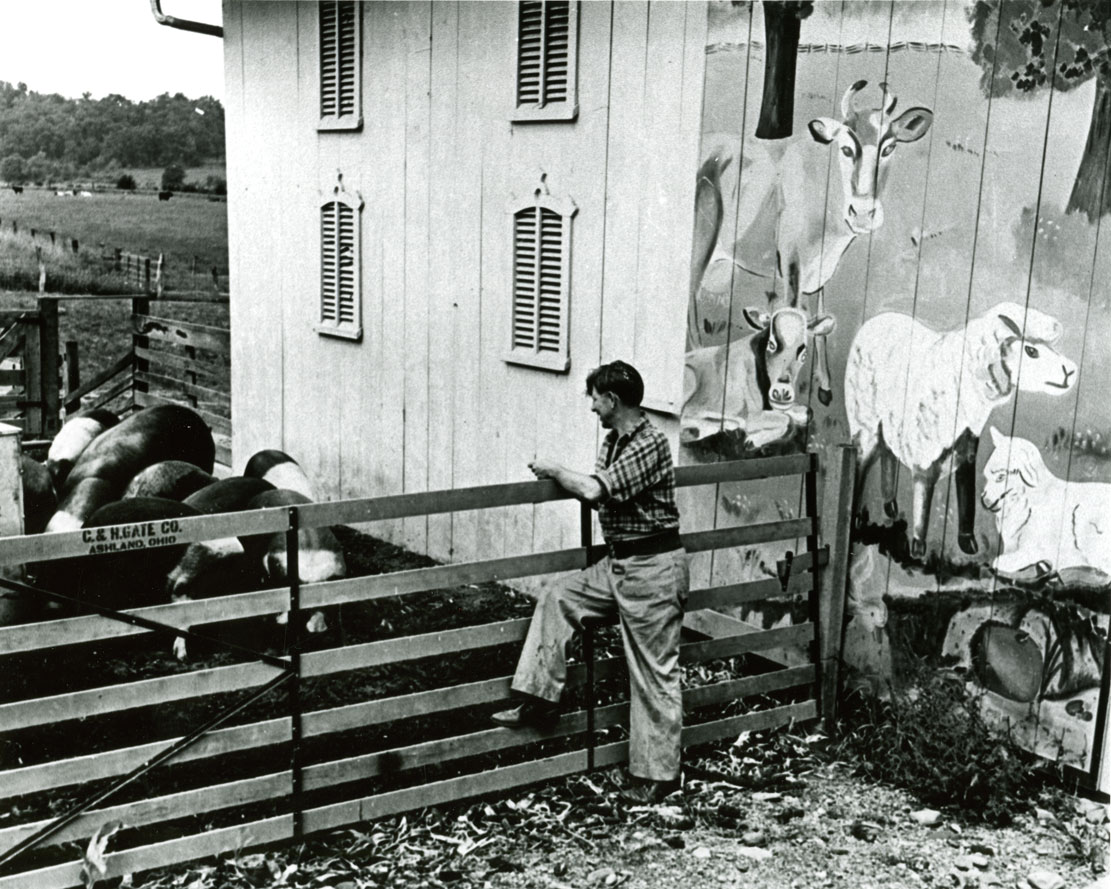
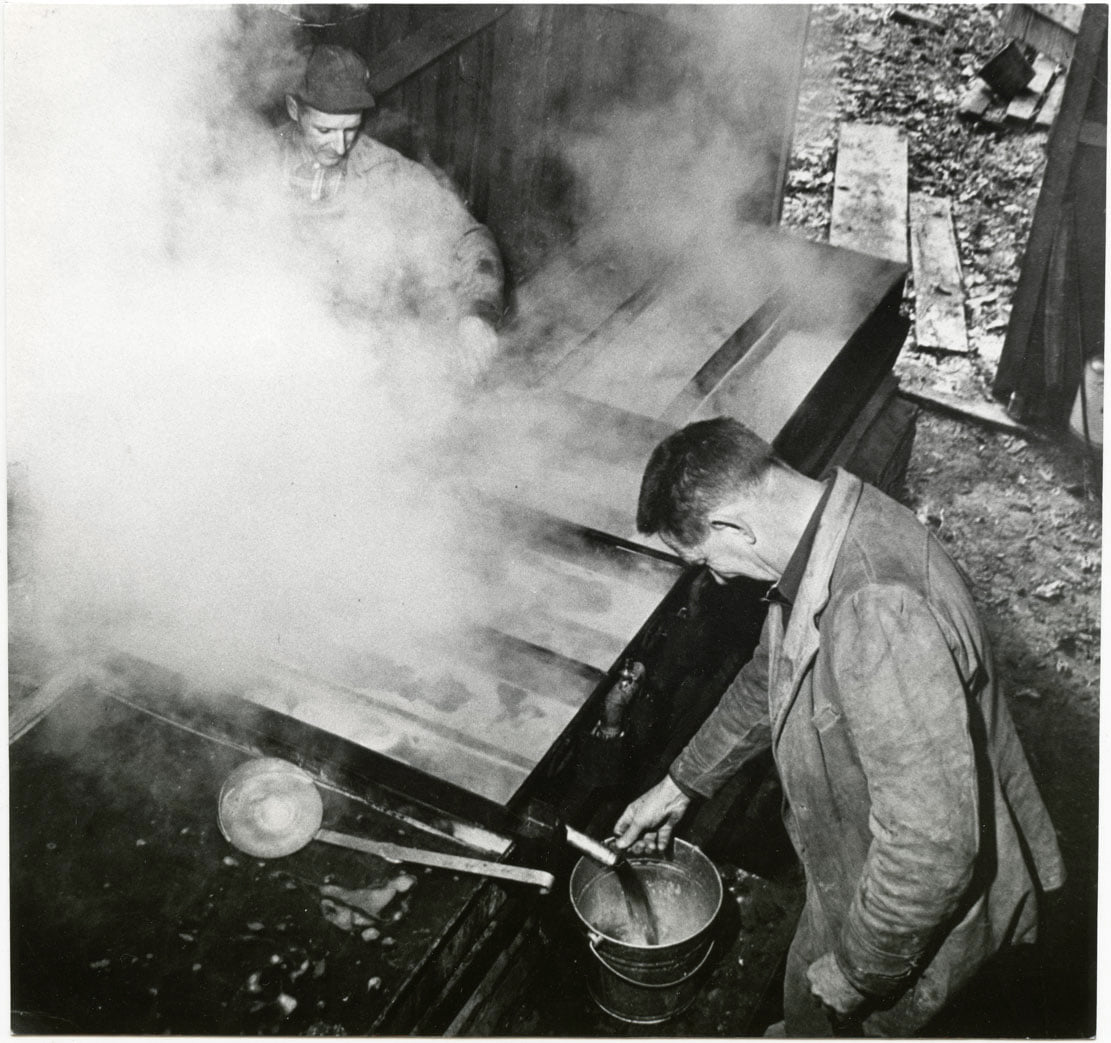
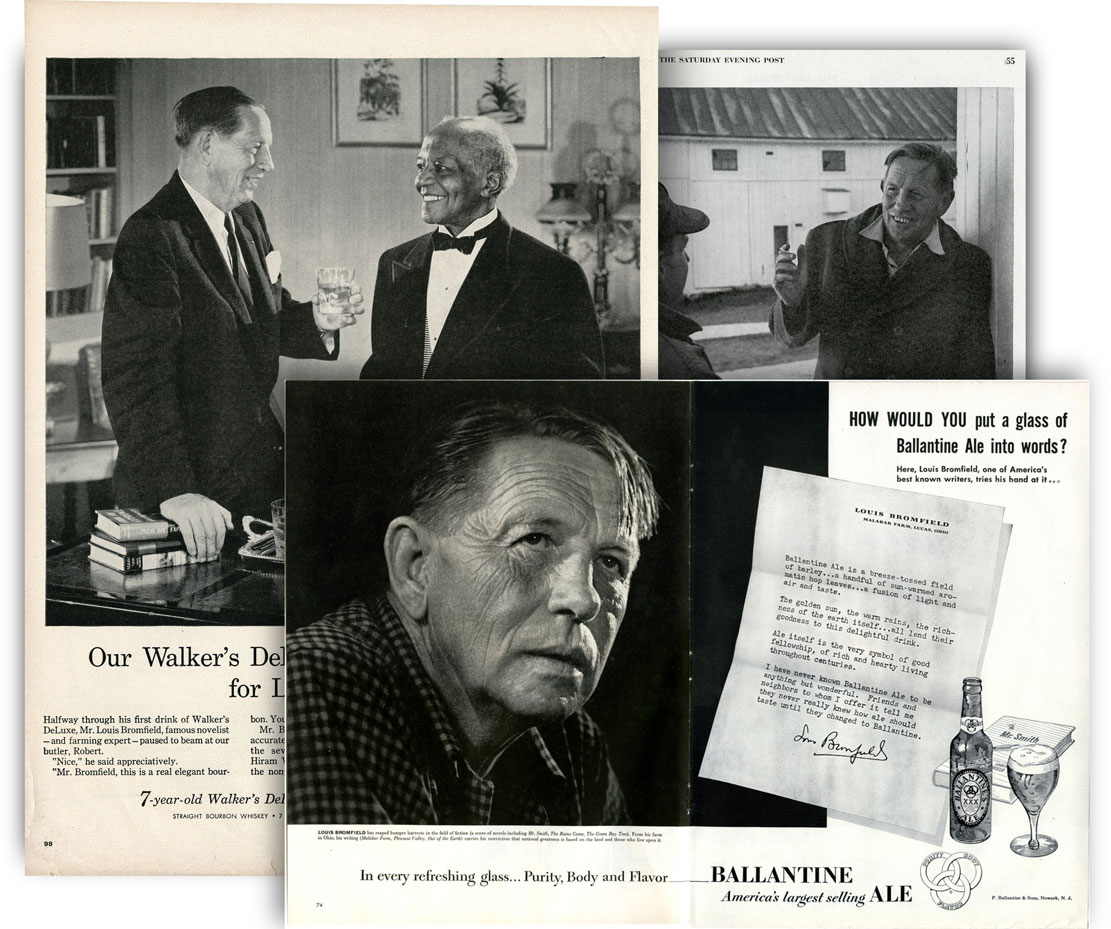
There was a time in the 1940s when Bromfield’s endorsement for anything agricultural was a virtual guarantee for sales. His publisher in New York was hardly going to pass that up, so he commissioned a farmer portrait to put on the dust jackets of Louis’ best-selling novels, by an artist renowned for his White House portraits of Presidents.Bromfield, of course, never wholly abandoned his dream of living in a nineteenth-century farmstead, and as a tribute to former times he commissioned a Barn Mural painted on the Main Barn. It was straight out of his childhood memory of unforgettable barns from the Richland past.There was one element of Bromfield’s ‘self-sufficient farm’ fantasy that he held onto and cherished to the end of his life—turning maple sap to sugar every spring on the ridge above Switzer’s Creek.In his last years at Malabar Farm, after decades of sharing his passion with the nation, Bromfield wanted to literally share the fruits of his labors with his neighbors by building an incomparable roadside Produce Stand on Pleasant Valley Road.In the mid-1950s, as Bromfield’s name slowly faded from the national spotlight because of changing tastes in American literature, his legendary income sagged. New methods of marketing Malabar Farm had to be developed. One of these was selling jams and jellies in a fashionable New York City department store and by mail order.Bromfield bolstered his income in the 1950s by selling his face to advertisers in the magazines that once carried his stories.In spite of Bromfield’s national prominence, what he longed for most was to be a good neighbor, as was his father before him, and ‘one of the gang’ among local farmers. Here he is at a meeting of the Lucas area grange where he declined to sit at the head of the table.It would be possible to estimate the vast distances Bromfield traveled for speaking engagements all over the country by collecting newspaper articles from dozens of states documenting these trips.
He never gave up talking to groups of any size, and shaking hands even as his unbelievable energy began to wear down. Here he is in the last year of his life getting ready to address a crowded auditorium in New Jersey.Bromfield’s best friend and business secretary, George Hawkins, died in 1948, and then his wife, Mary, was gone as well in 1952, so, even as he was still jaunting around the hemisphere starting Malabar-type enterprises in Texas and Brazil, the Big House at Malabar Farm became a lonelier place.
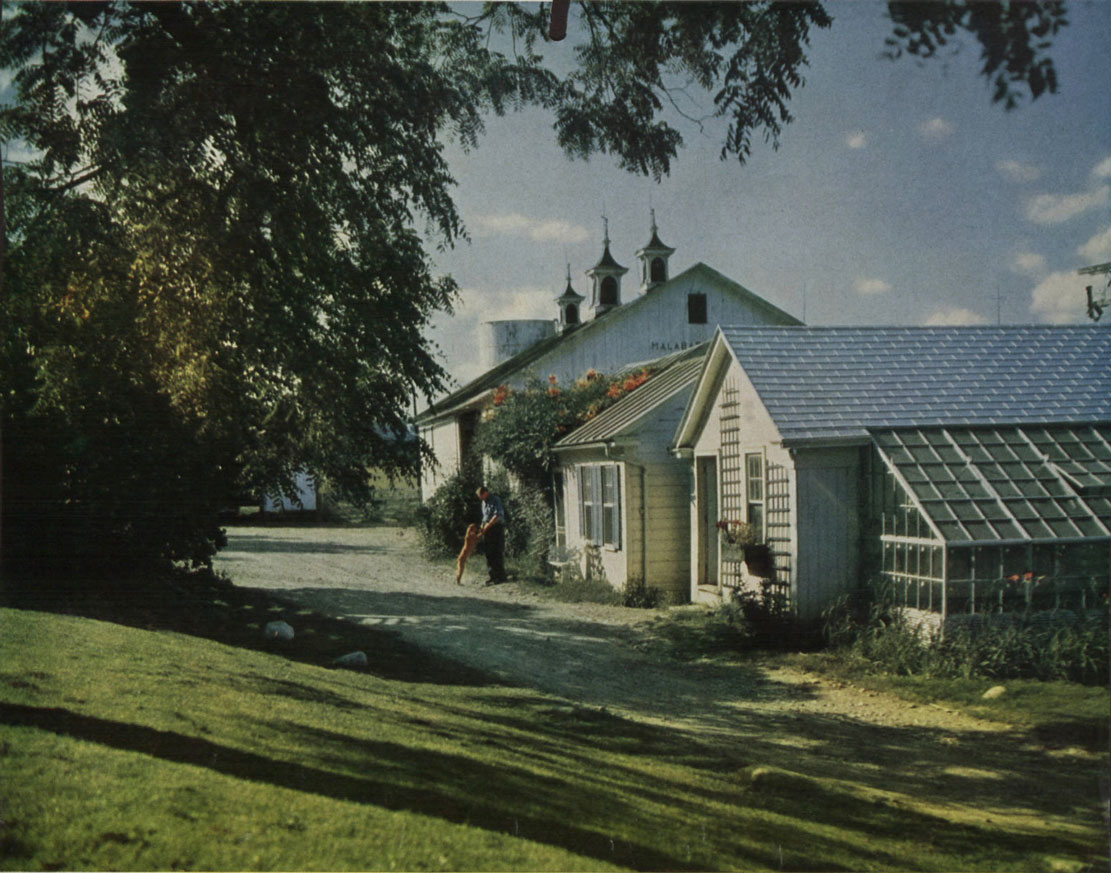
This photo of the farmyard quadrangle area from the 1955 Malabar Farm Calendar seems to capture perfectly the bittersweet aura of Louis’ last days.It is difficult to judge today Bromfield’s influence in the 1940s with only a small shelf of farm books as an indicator. He also had a weekly news column syndicated in dozens of U.S. cities that can be added to his pile of printed words. Less easy to quantify are the untold millions of Americans who listened to his weekly radio show back in the days before television when radio was as ubiquitous as the internet is today.
For folks in the decades after his career as a novelist waned, he is more poignantly remembered and revered as a Conservationist and activist for Sustainable Agriculture.
Louis Bromfield was tireless in traveling around the country speaking to farmers, newsmen, businessmen, Congressmen about the critical importance of protecting America’s soil. He was tireless in typing newspaper columns, magazine articles, agricultural pamphlets—bringing his heightened gift for communication to the desperate timely crisis.
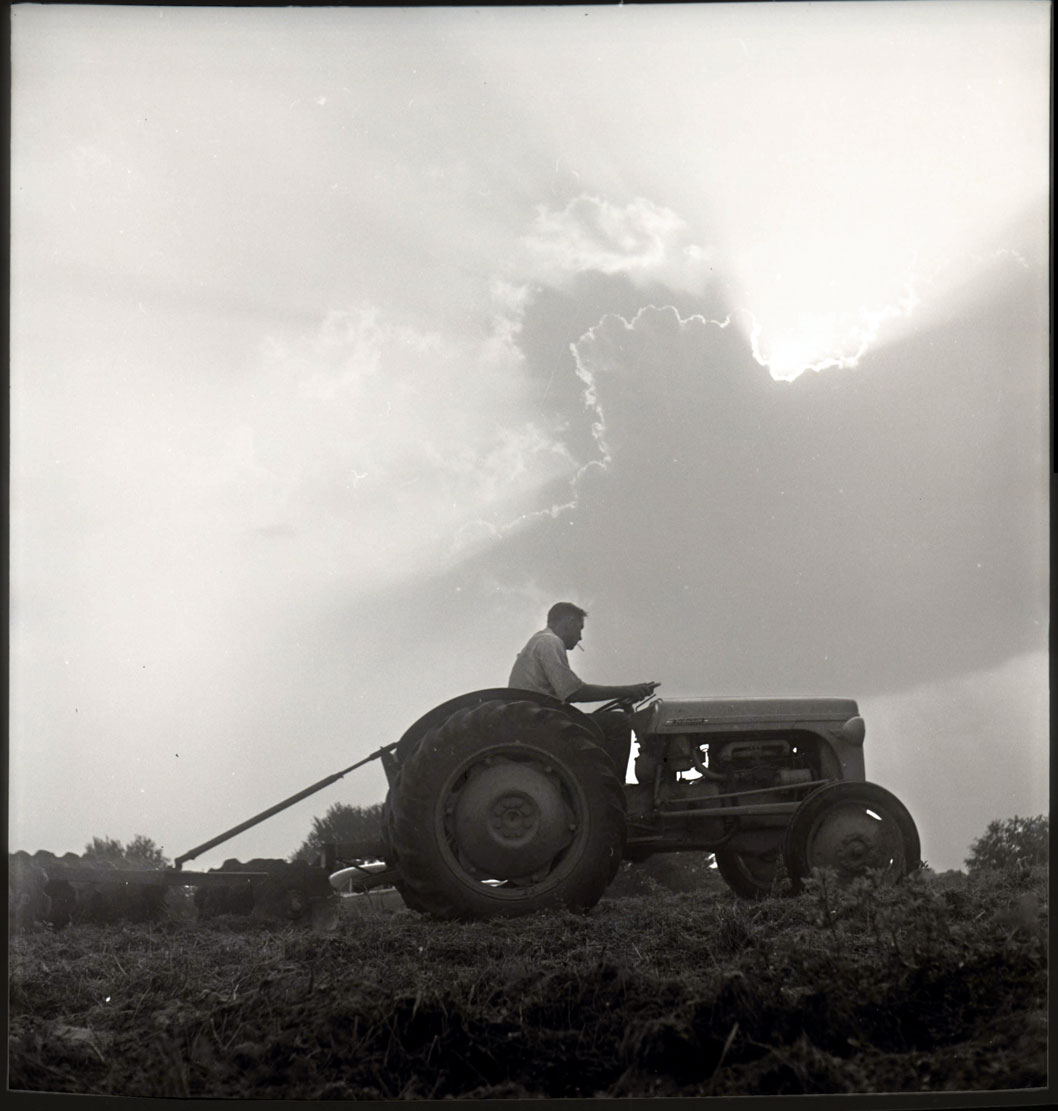
But all that tireless activity wears a man down. Bromfield periodically found himself exhausted. What he did at that low ebb to balance himself, to regain his prodigious stamina and energy, was very simple: he got on the tractor and spent hour after hour grooming the fields and crops.
His neighbors saw the tired, broken old man climb up on the Farmall in the morning, and at the end of the long day a smiling, enthusiastic farmer rode back into the barnyard, chipper as a young man.
Bromfield gave unbelievable amounts of passion to his nation, and all those vast reservoirs of energy he drew from the land itself.
Thank You
Pictures and information in this article were gleaned from many sources including John Stark, Malabar Farm State Park, The Ohio State University, Ellen Geld, Paul Cropper, Bill Solomon, Louis Lamoreaux, Max Drake, Carmen Stricklen, Vic Day, Anne Sabri, and Corinne Schettler.
Louis Bromfield (1896-1956) was born in Mansfield, published 33 books of fiction and nonfiction in his writing career that included a Pulitzer Prize, 18 best-selling novels, and 14 major motion pictures.
Post Script:
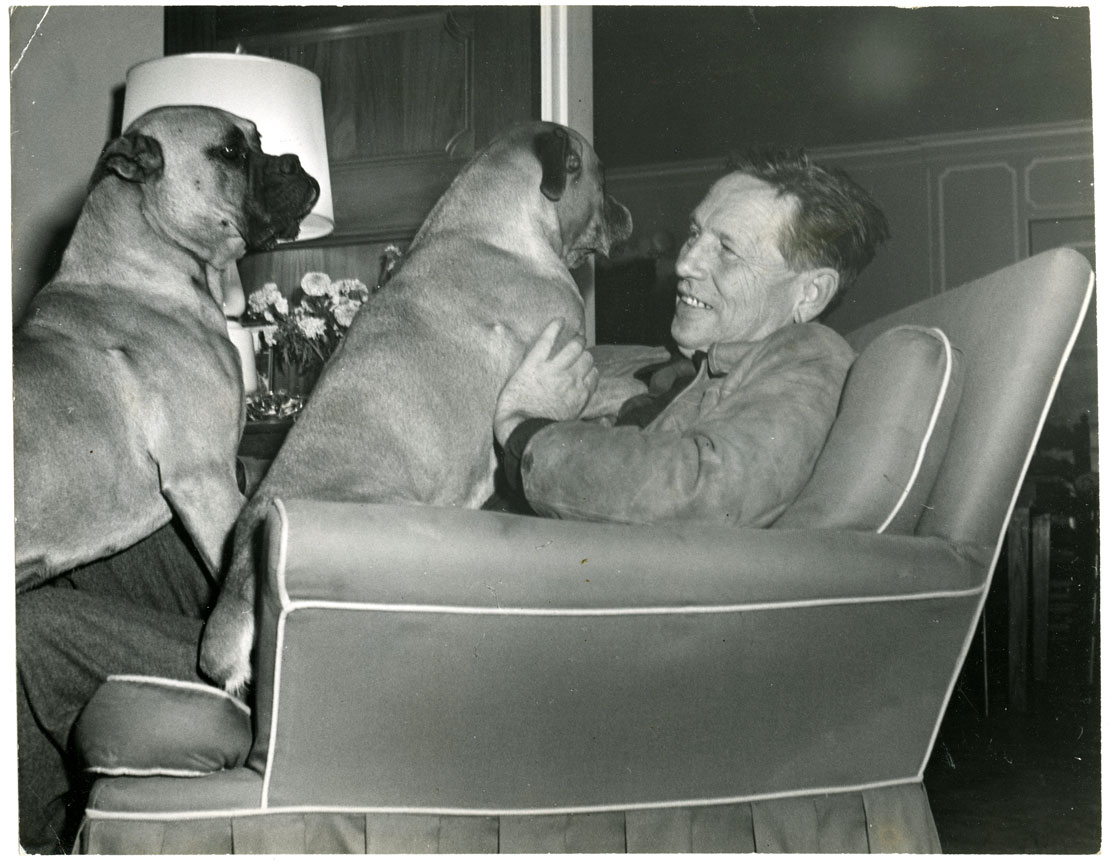
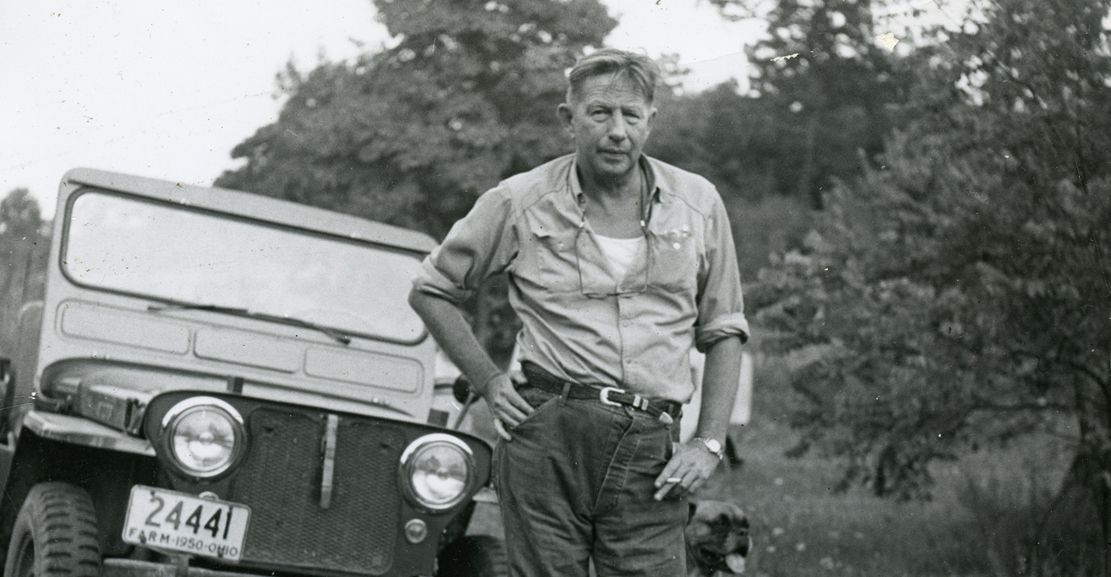
Here is Louis with his farm wheels and one of many farm dogs. This was actually a news photo released to U.S. media in 1950, and it’s worth noting that his PR guy and best friend George Hawkins had died a year or so earlier and wasn’t there to make sure Lou smiled for the camera.










 Richland County History