
Americana
America had a loving reappraisal of its roots in the 1930s and ‘40s when a generation’s worth of painters, authors, playwrights, historians, and movie makers focused the arts of popular culture on the character of the nation through its regional heritage. Every different part of the country had its own local voice speaking to the nation, and the unquestioned voice of Ohio and the Midwest was the novelist Louis Bromfield.
He actually helped kick off the new trend in literature by writing a best-selling epic novel, called The Farm, that examined his own Richland County roots. Published in 1933, at the forefront of the American Regionalist movement, Bromfield blazed a trail to explore the nation’s past, and triggered the trend of self-evaluation and cultural nostalgia that helped establish the new genre of Americana.
It was that year—in 1933—when one of Bromfield’s Publisher friends asked him to write a column based on The Farm for the Chicago Tribune. It was printed in the December 2 edition.
The Publisher introduced “this charming vignette of a Christmas in the days of “The Farm,” by describing the book as “one of the realest, tenderest, and most beautiful records of pioneer life in the middle west.”
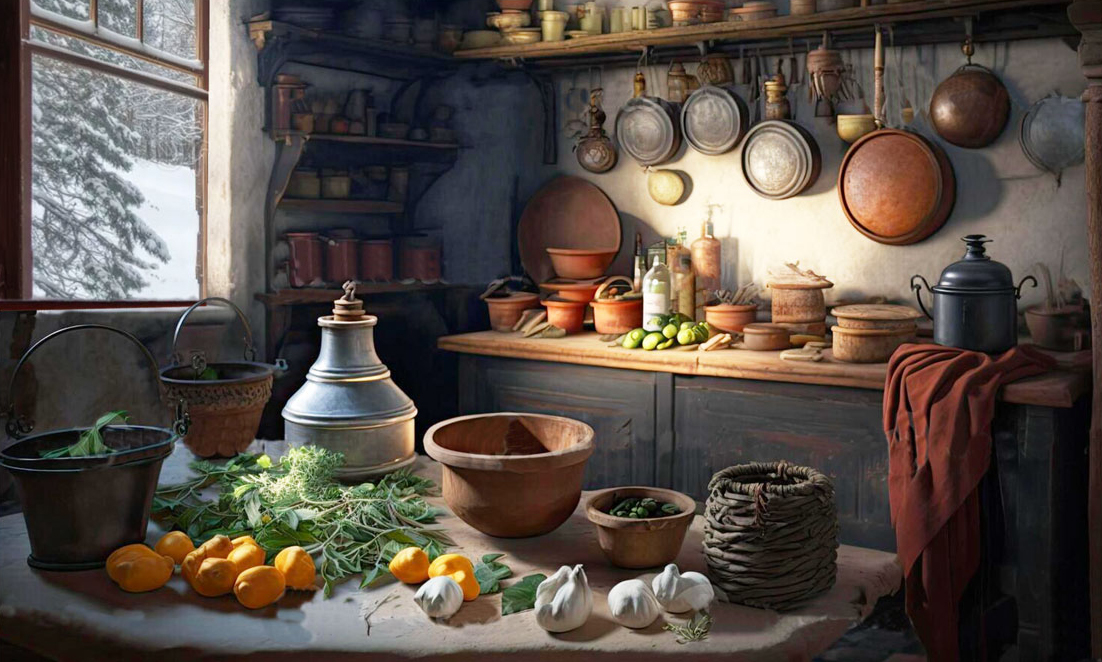
My Grandmother’s Christmas
by Louis Bromfield
The first hint of the approach of Christmas was the sight of the turkeys hanging high on the straight pole beside the wood yard. They hung there plucked and naked to freeze during the night, two or three days before Christmas, and if all of the children had not already known how many uncles and aunts and cousins were to be at the Christmas dinner, we could have guessed from the number of turkeys hanging at the top of the pole out of reach of skunks and raccoons and the farm dogs.
The turkeys came out of one of my grandmother’s flocks. In the late spring, when the little ones were hatched out, she would tend them carefully, rushing out at the approach of every thunderstorm to gather them warm and dry into the poultry house, for nothing is so dangerous to little turkeys as wet feet. She fed them carefully until their first feathers were grown and they were big enough to fly up into the trees, where they would be safe at nights from prowlers. Then they were set free and, with the turkey hen, wandered for the rest of the summer and early fall all over the farm.
Usually there were five or six hens, each with anywhere from six to a dozen growing turkeys. You would come upon them here and there, living completely wild and free. In October when the first frosts came, each flock usually returned to the barnyard and the chicken run, where living was easier, but occasionally a hen and her flock would prefer the wild life and then the grandchildren were sent on a turkey hunt all over the farm to find the wandering hen and her nearly grown brood. After they came home the fattening process began and from then on through the winter, one by one, the plumpest birds were chosen for the table.


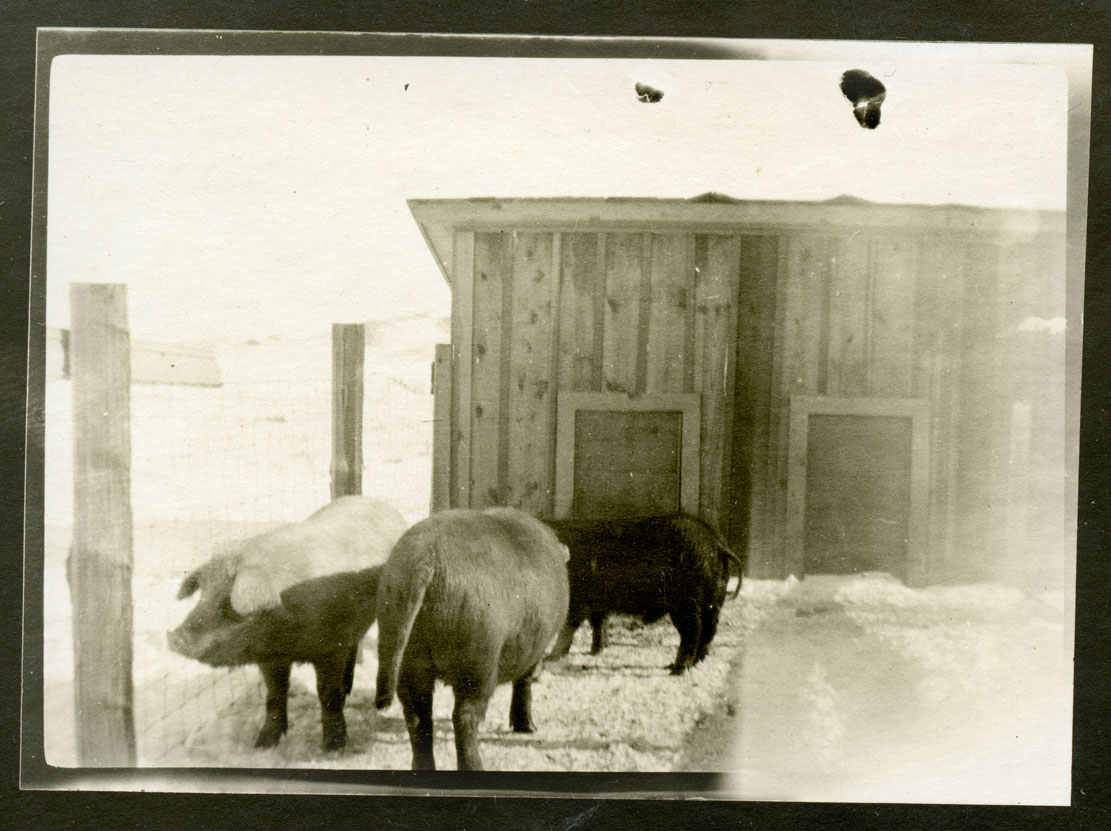
My grandmother began her Christmas dinners the spring before. From among the pigs she always chose a special litter which was to be raised and fed under her care, because they were the ones which were to supply her larder with sausage and bacon, ham and shoulders for the coming winter.
They were turned loose in the orchard and fed upon wheat and skimmed milk, because that made the bacon lean and sweet, and toward the end of the summer they were sent for a while to the woodlot where they ate beechnuts and acorns to give their meat flavor, and toward the end for four or five weeks before butchering time they were shut into a pen where they couldn’t run about too much and fed on corn to give them the proper amount of fat. When they were killed and the sausage made she it was who seasoned it. She it was who saw that the hams were cured in the smokehouse after the recipe which pappy (her father) had brought from Maryland at the beginning of the nineteenth century.

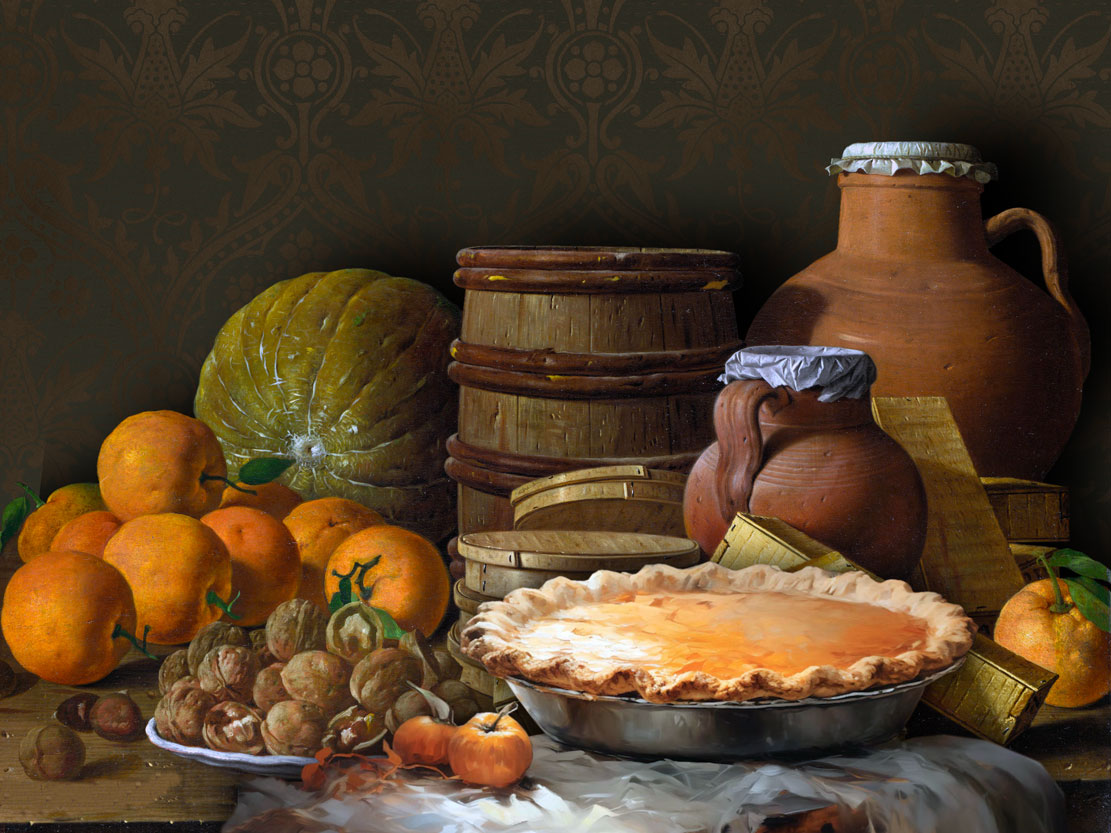
Everything which came onto that vast Christmas table, save the sweet potatoes and the coffee, was raised on the farm, and it was a vast array which confronted aunts and uncles, cousins and grandchildren. There were the brown turkeys stuffed with sausages and sometimes, if it was a cold winter, with oysters as well. There were mashed potatoes and brown sweet potatoes, lima beans, corn (which had been dried in the sun), pickles, chili sauce and piccalilli and Indian relish, jams and preserves, suet pudding, corn salad, mince and pumpkin pie (made as only good pumpkin pie should be made, of Hubbard squash), cheese and coffee and cake, and last of all the Christmas candies made with hickory nuts and black walnuts and the maple sugar which all came from the wood lot.
It was a huge feast and I do not see how all those people ate so much. I think none of us are the men and women our forbears were, because I have never seen any one in these times devastate a groaning table in the same fashion. Perhaps it was the cold winter air and the smell of pines and wood smoke in the garden, the snow and the sunlight, and most of all those whiffs and scents which strayed out from the kitchen into the woodshed, the dining room and sometimes even into the open air. I only know that by one o’clock on Christmas day all those cousins and uncles and aunts and grandchildren had become hysterical with hunger and anticipation, and that an hour and a half later the table was nearly bare and the house filled with the scattered dozing victims of the feast.

Where, exactly, was The Farm where young Bromfield ate his Christmas dinner?

In Bromfield’s day, the farm where he spent much of his time growing up was found “out Fourth St. and up a lane.” Since then, the landscape / farmland has been carved into many neighborhoods that are separated by highway pavements.
Today The Farm is found between Rt 309 and US 30, just west of Home Road, off of W. Longview Ave.
For more background about the place, the book, and the author: Louis Bromfield and The Farm
Thank You
These photographic postcards in the Louis Bromfield scrapbook were scanned from his collection of personal papers when it was still housed at The Ohio State University Mansfield in Bromfield Hall.
 Richland County History