
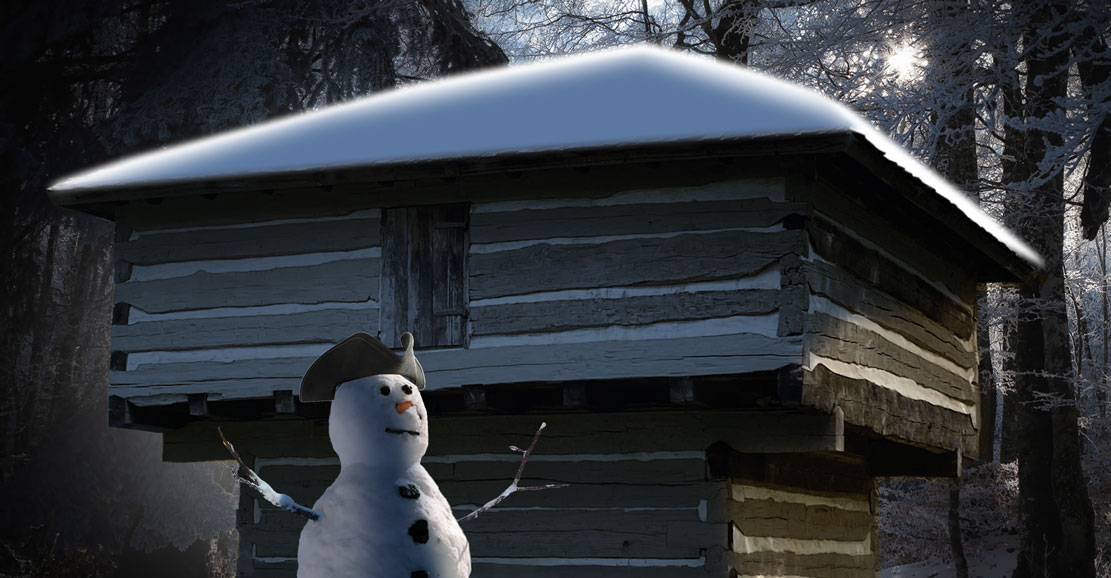
A tavern built of logs in a settlement so young it is still wrapped in forest. A fire on the hearth to welcome those out of the night looking for cheer in the darkening days of early winter.
An evergreen carried from the woods into the safe haven, so the room smells of pine and spice. The soft limbs of the tree lifting candles that wink like stars watching down on our cold little planet with a warm smile.
It’s a compelling image.
It’s an image of the Wiler House nearly 200 years ago.
Childhood Memory
It was Wiler’s young daughter who passed this memory on to her son, who passed it again to his daughter. She was the one who, in her seventies, shared it with me more than forty years ago.
My friend had the kind of odd details that bring those old, old moments very close. The candles, she said, were mounted onto the pine limbs with the use of napkin rings. People lived by candlelight back then, and they had far more ingenious ways of managing fire than we imagine today.
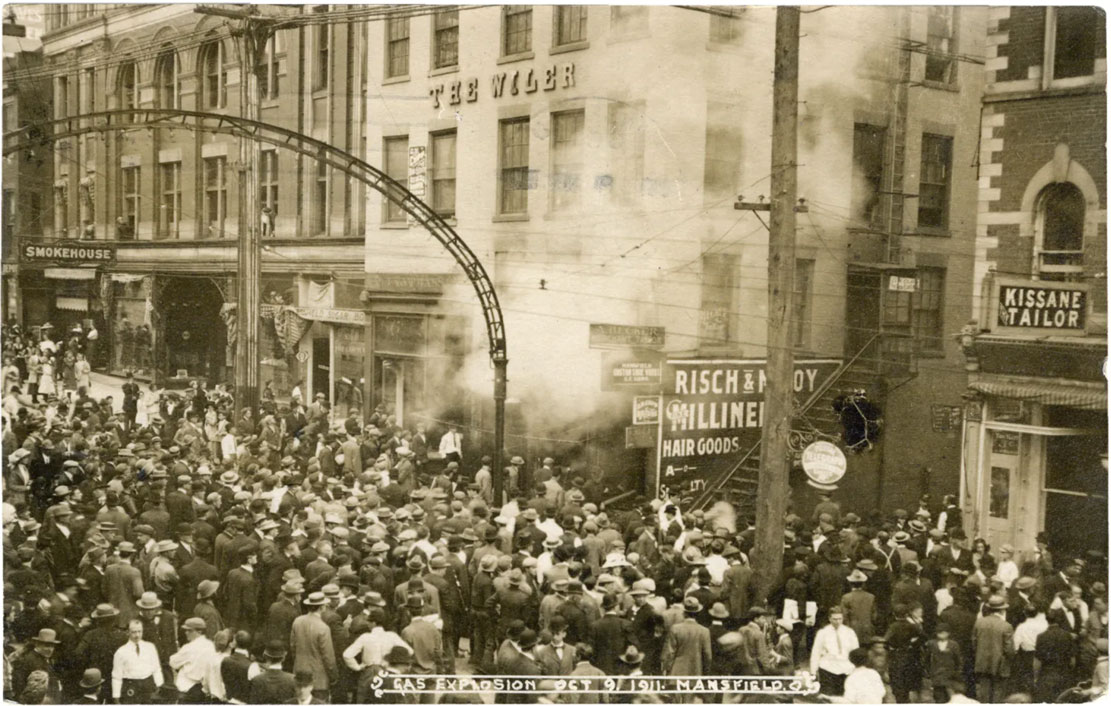
She showed me one of those napkin rings: a squared hoop of pewter. Dulled with age, it had survived through all the decades when the little log tavern rose to fill a city block with four stories of brick in downtown on Main Street, and then, exhausted with age, settled again back once again into the earth.
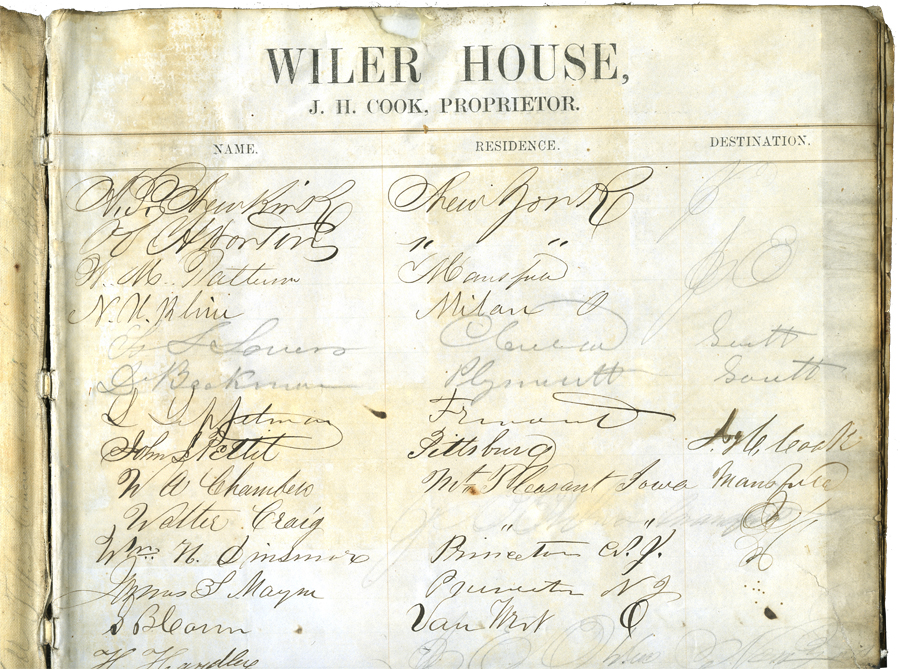
She knew the Wiler story. She had the deeds. She had an old Wiler House register signed by hundreds of guests.
The Wiler Story
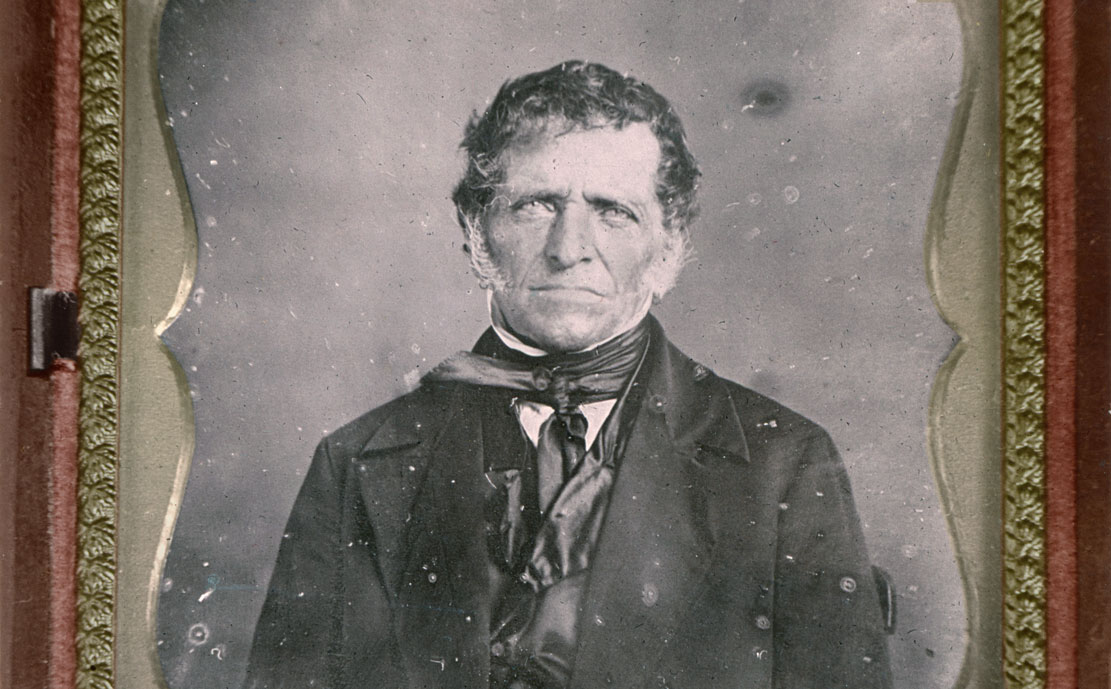
John Jacob Wiler, she said, came to America from Switzerland after traveling the whole European continent as a weaving apprentice making lace. He schooled in France, and was kidnaped in Germany to be pressed into military service for their Napoleonic war. He managed to dodge cannon fire in one of those epic battles, but came away with bad dreams of so many fallen soldiers.
He was in his thirties when he got to Mansfield and worked for Henry Steyer at his inn built of logs. He married Steyer’s daughter, and then was wedded as well to the innkeeper’s trade when his father-in-law put the log tavern in Wiler’s name.
The Wiler House eventually became a landmark of the middle west, after there were railroads connecting New York and Chicago; and the hotel gave overnight accommodations to many noted and historic characters of the nineteenth century.
But in the 1820s, Wiler’s log tavern had a more modest reputation as simply a warm place in town to talk on a cold night. Johnny Appleseed could be found there warming his feet at the fire chatting about Heaven.
When little Mary Wiler was seven or eight, her father came in the door shaking off snow and carrying a hemlock. He stood the tree on the floor in the public room and rigged a brace to keep it standing. Then he carefully covered the limbs with candles the way he had seen it done in Germany. And then they lit the candles.
She had never imagined anything so enchanting. Actually, no one had. No one in the village had ever seen such a thing.
It was Mansfield’s first Christmas Tree.
The Yule Tradition
I’ve been reading accounts of Ohio’s First Christmas Tree, and there are several places in the State who have been jockeying for the title over the last hundred years or so. But from what I’ve read on the bronze plaques, newspaper columns, local histories, and blogs, there are none of these first trees before the 1840s.
Wiler’s log tavern was rebuilt into an edifice of brick and mortar in 1831, which means Mary Wiler’s memories of a candle lit tree in a log building took place in the 1820s.
It really doesn’t matter if others need to take the credit. We know the truth, and truth is quiet. And it glows like candles on a piney tree.

What’s Really Interesting:
In Wooster, they decorate a ceremonial Christmas tree every year at the grave of the man who put up their 1847 first tree. What’s really interesting is that in Mansfield we place our ceremonial city Christmas tree less than fifty yards from the spot where Wiler put his first tree in the 1820s. The Wiler tavern—and then the Wiler House—stood just across the little alley behind Richland Carrousel Park where our giant pine is decorated every year.
So the city’s tradition has been honoring our deep history for decades without even being aware of it. It’s so perfect—someday they’ll look back and think it was planned this way all along.

Thank You:
This documentation, long overdue, we owe to Josephine Cook (1903-1979) whose grandmother, Mary Ann Wiler Cook (1821-1911), transmitted it to her son, James M. Cook (1859-1945), who was Jo’s father.
She was quoted in a couple News Journal interviews, in the 1950s and ’60s, asserting the First Christmas Tree in Mansfield was at the Wiler House. It was important enough to her that she actually made that notation in red pencil on the original Wiler deed from 1820.
Notes:
American author and Mansfield native Louis Bromfield wrote a novel in 1933 that tells the story of his family in the history of Mansfield, titled, The Farm; and the first chapter of the book takes place in a tavern he imagined as a cross between the Blockhouse and Wiler’s Inn.


 Richland County History