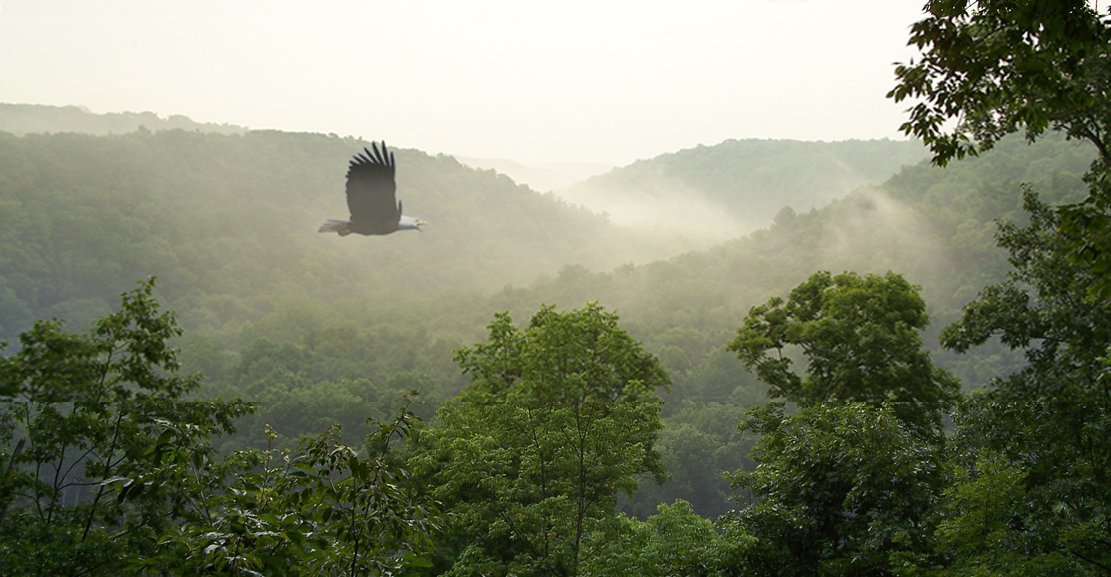
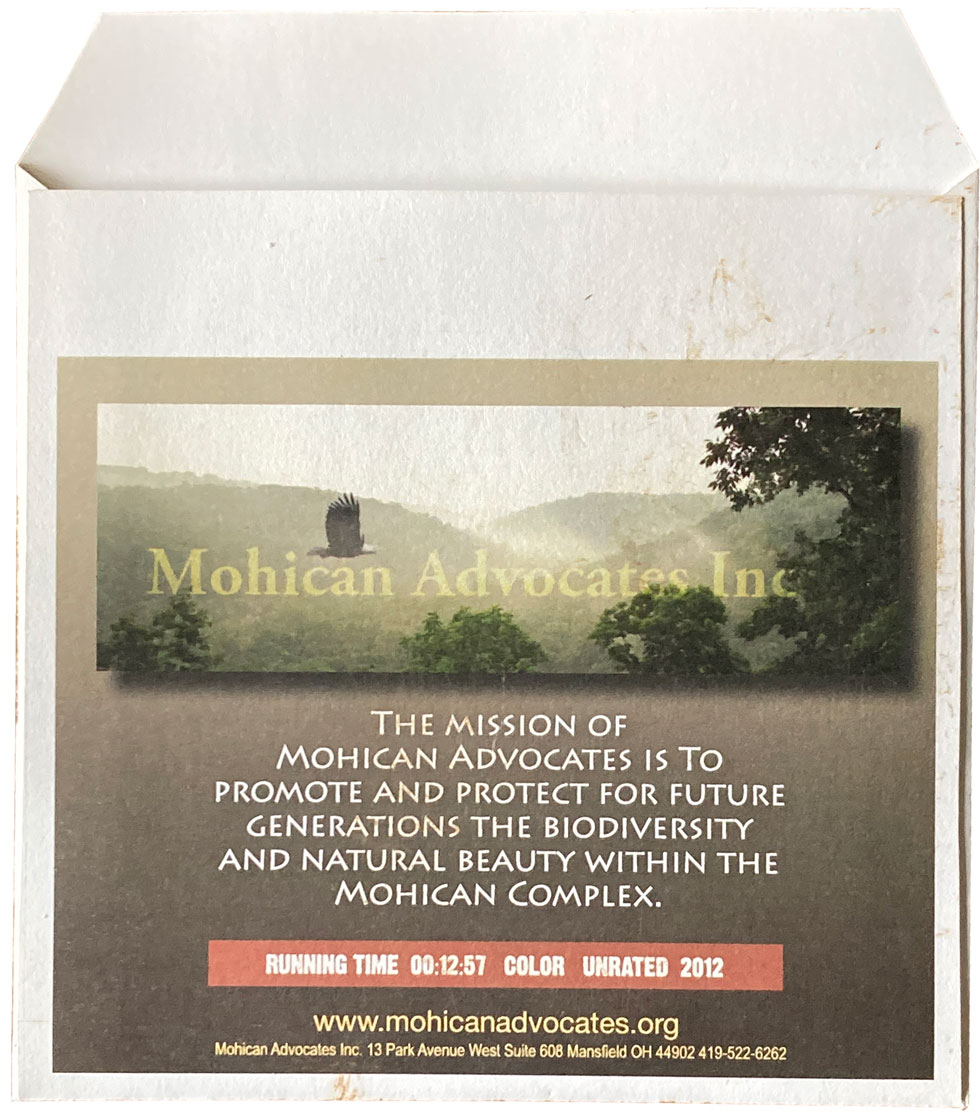
Mohican Advocates was organized in 2012, and their first act to protect the park lands, forested hills, and natural preserves was to draw supporters by producing this short documentary reminding us all how much we love Mohican.
Because people naturally protect what they love.
NOTES:
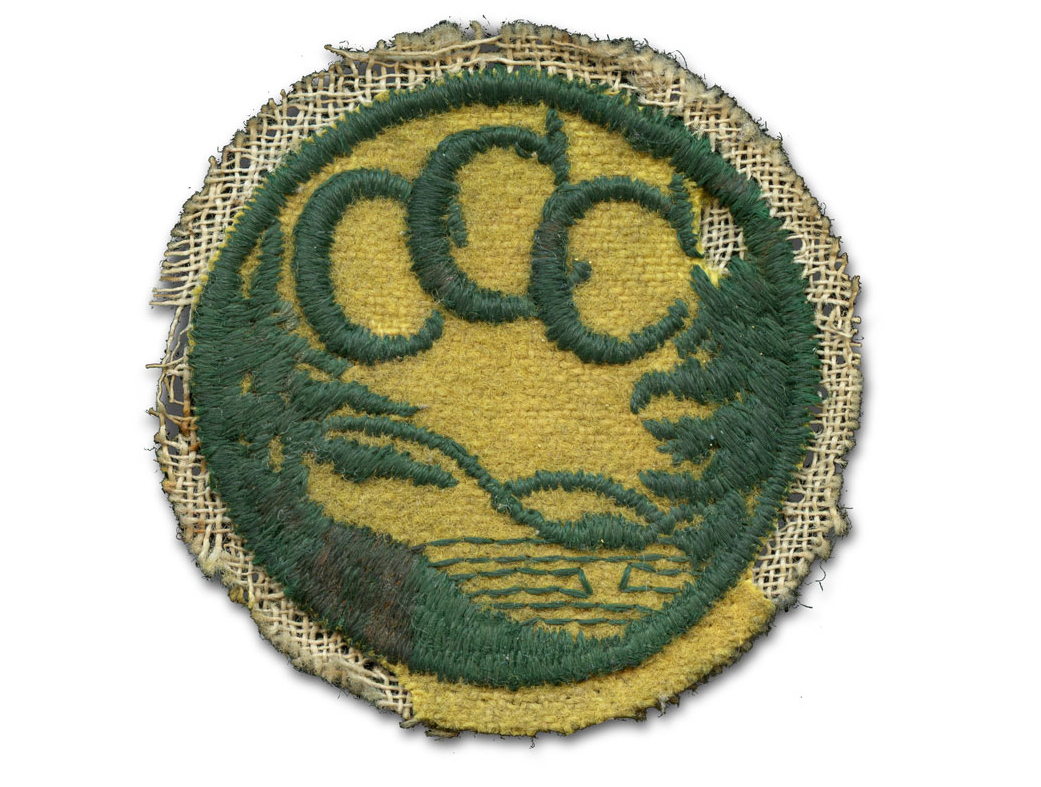
Camp Mohican: CCC Company #1530:
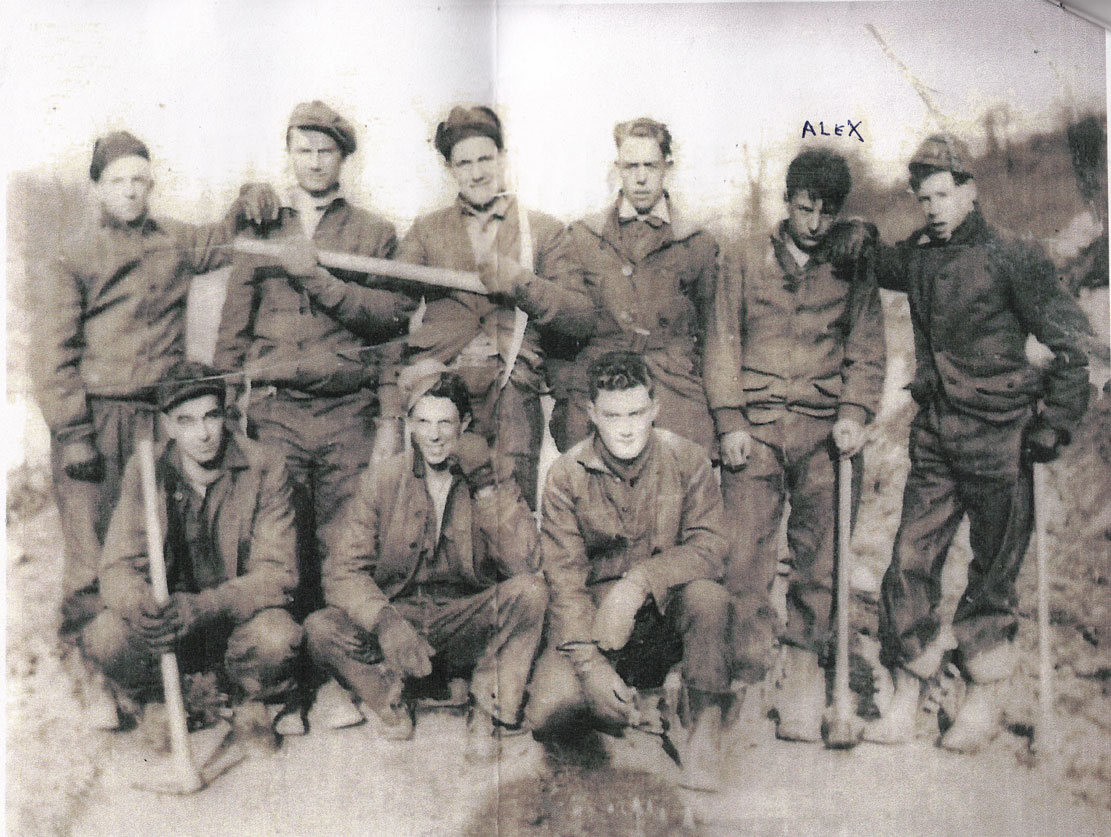
I was contacted in 2011 by Alex James (1917-2016), one of the last living CCC boys who served at Camp Mohican. He sent photos and a short memoir:
My first hitch in the C’s was right after FDR put out the call. I was in the 2nd bunch to leave Columbus, lying about my age, and took a train to Ft. Knox, KY were we underwent boot training. I think our unit was designated as J-4. The army hated our guts. We got paid more and had to serve less time.
A Marine boot camp had nothing on us. They ran us through the ringer. We were issued World War I uniforms but could wear civvies in town.
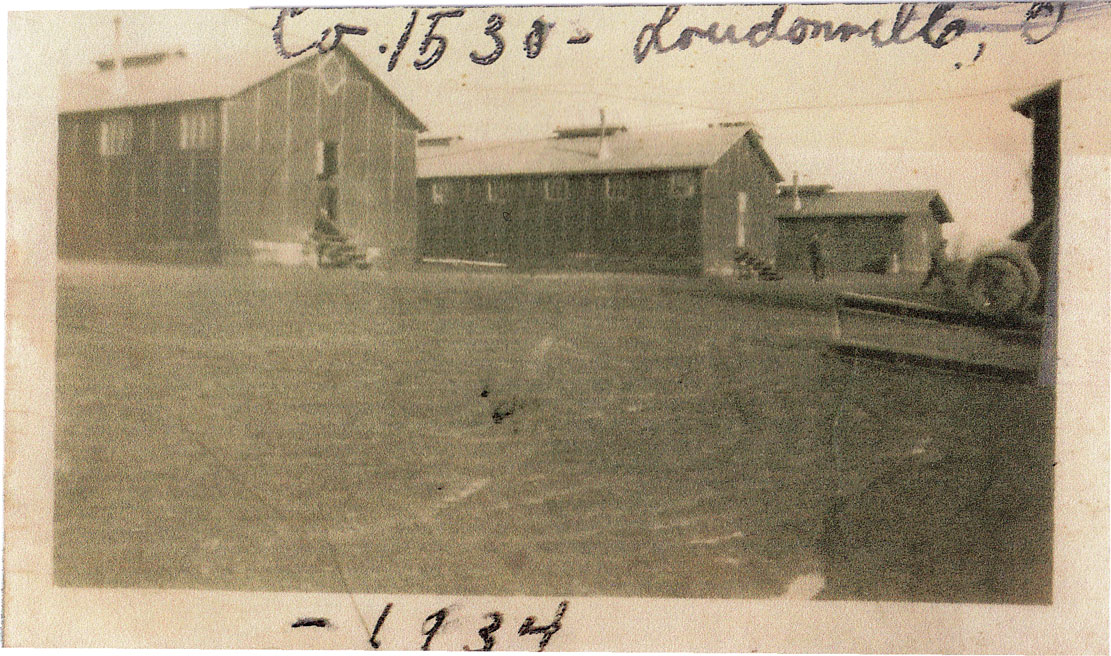
From there I was sent to CCC Co. 1530 Camp Mohican in Loudonville OH. Our camp was in the Mohican State Forest where our job was to plant pine seedlings day in and day out.
One of the reasons Alex was alive after his fellows had all passed is because he was the youngest of them all, being only 16 in this photo.
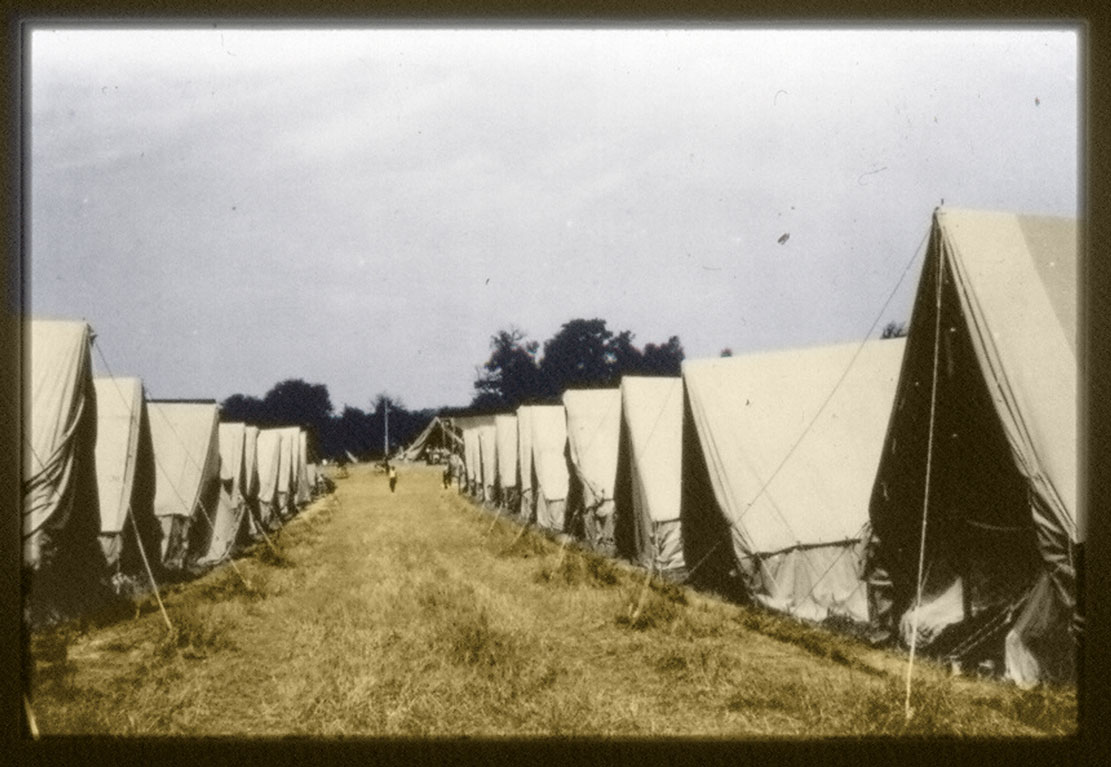
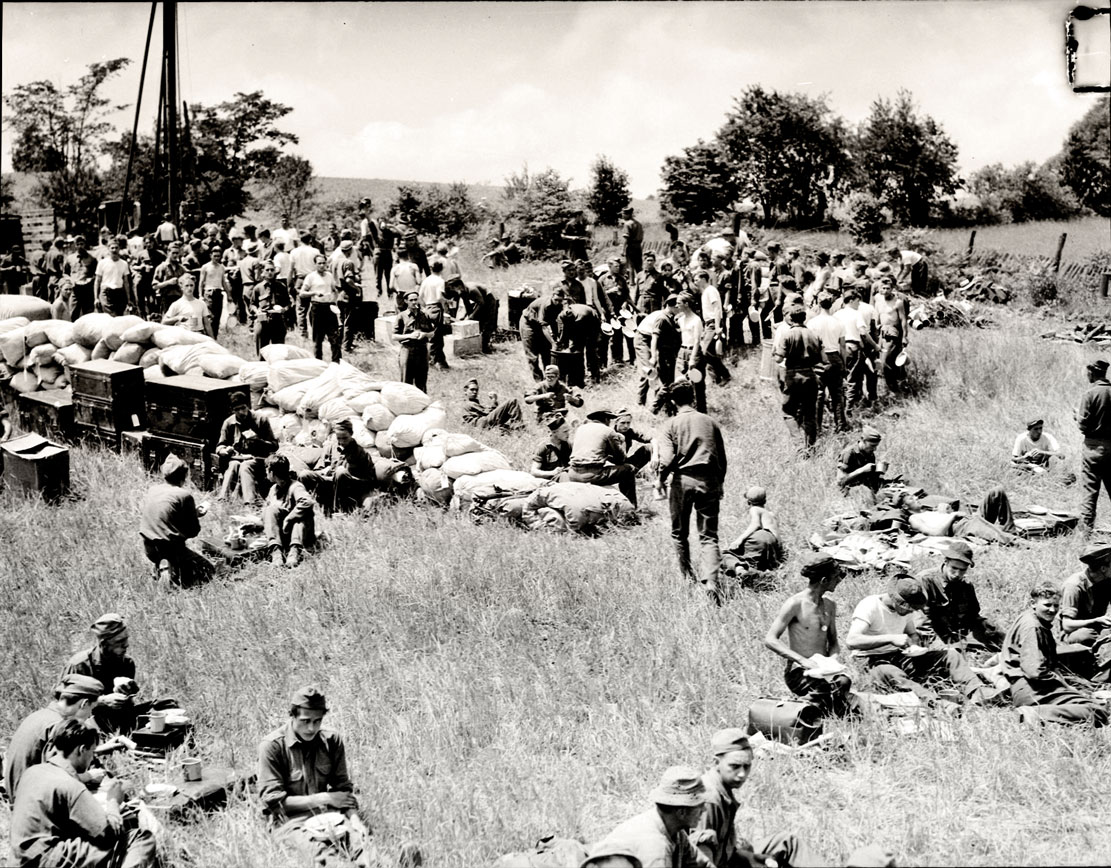
The 1933 CCC young men couldn’t start planting trees until they tended to other vital elements of their residency first: like building the barracks they slept in. Alex stayed in the middle building.
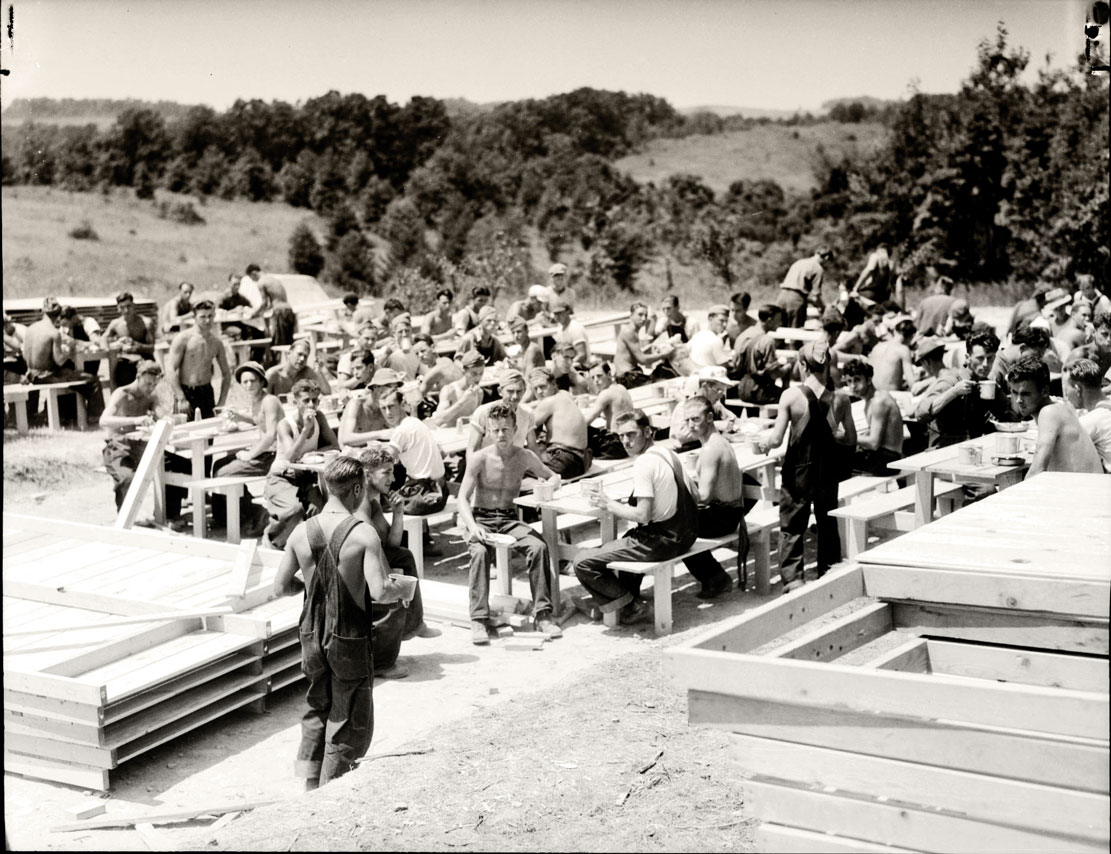
Members of Company 1530 also had to build their own dining hall. This photo from the collection of the U.S. Forestry Service captured the Camp Mohican guys during their first meal.
Here is the Company during their orientation Basic Forestry class.
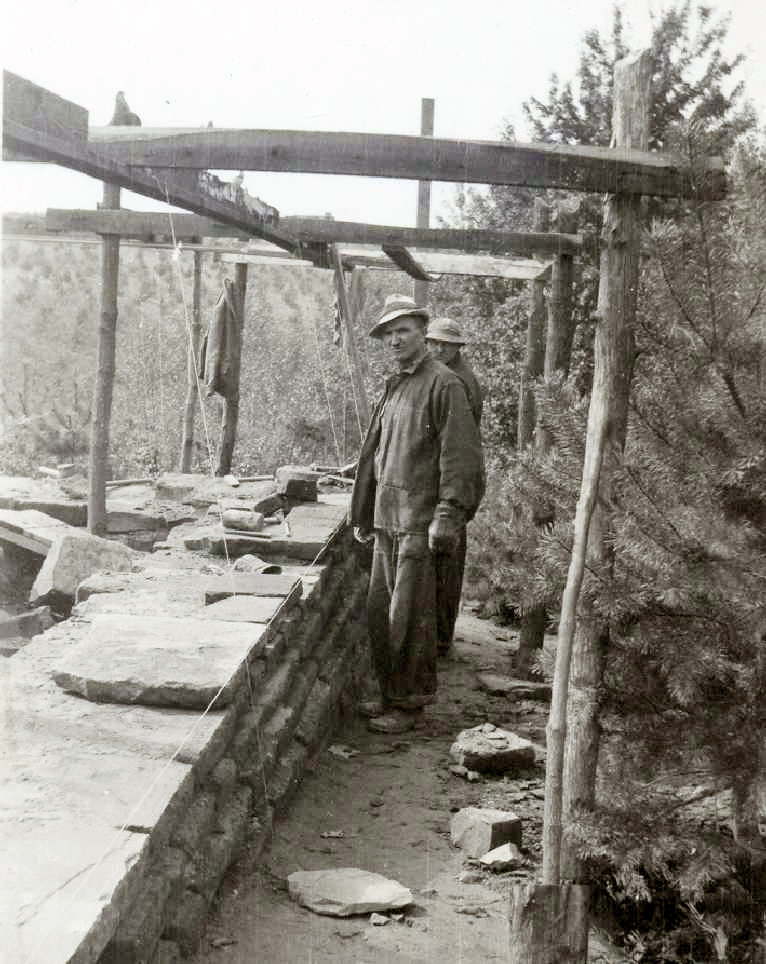
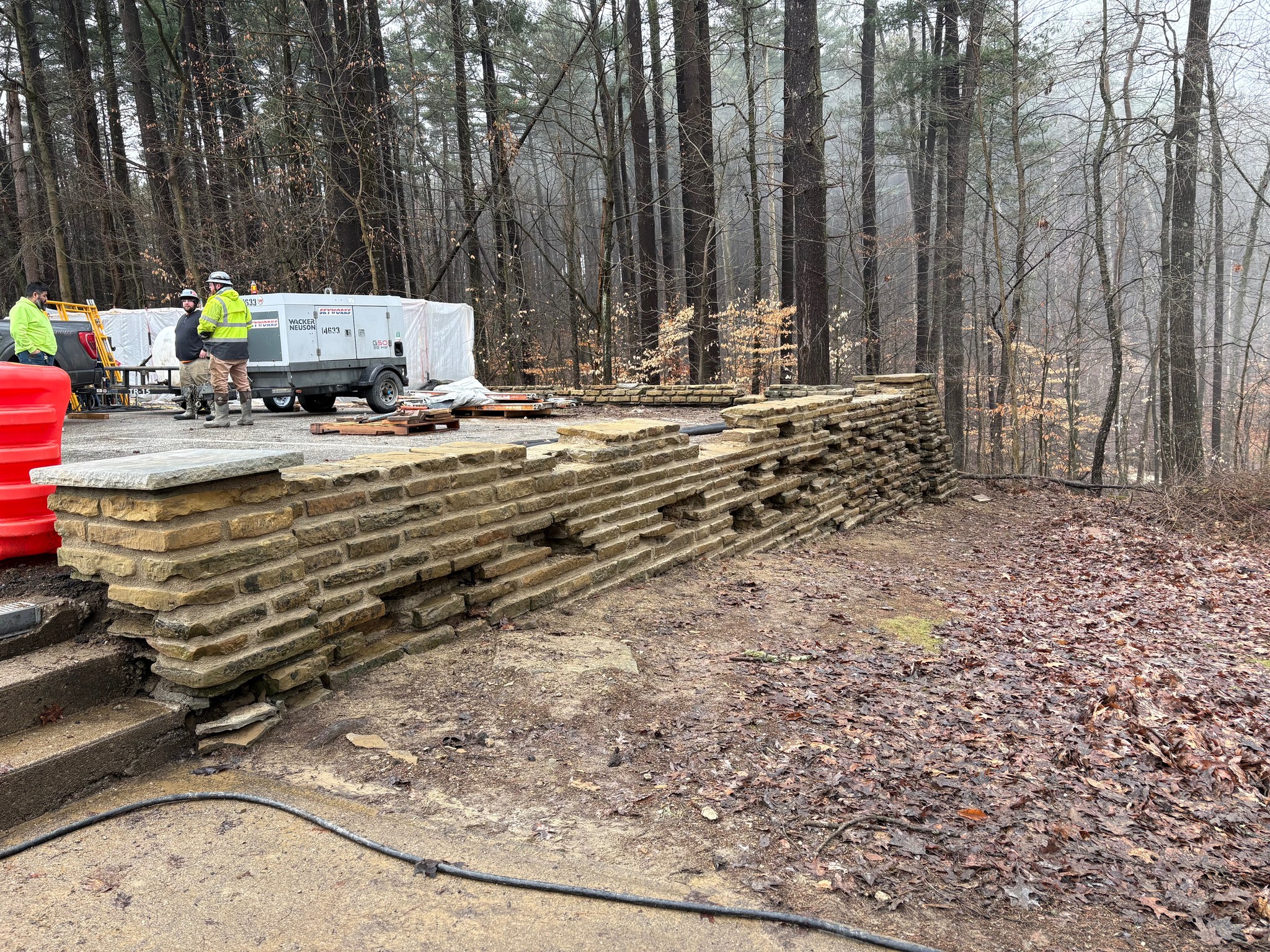
The second encampment at Mohican saw an older class of CCC residents whose time was spent building park infrastructure like stone walls, stone stairways, and public picnic shelters.
This is the same retaining wall photographed above being repaired in 2026.
CLEAR FORK GORGE:
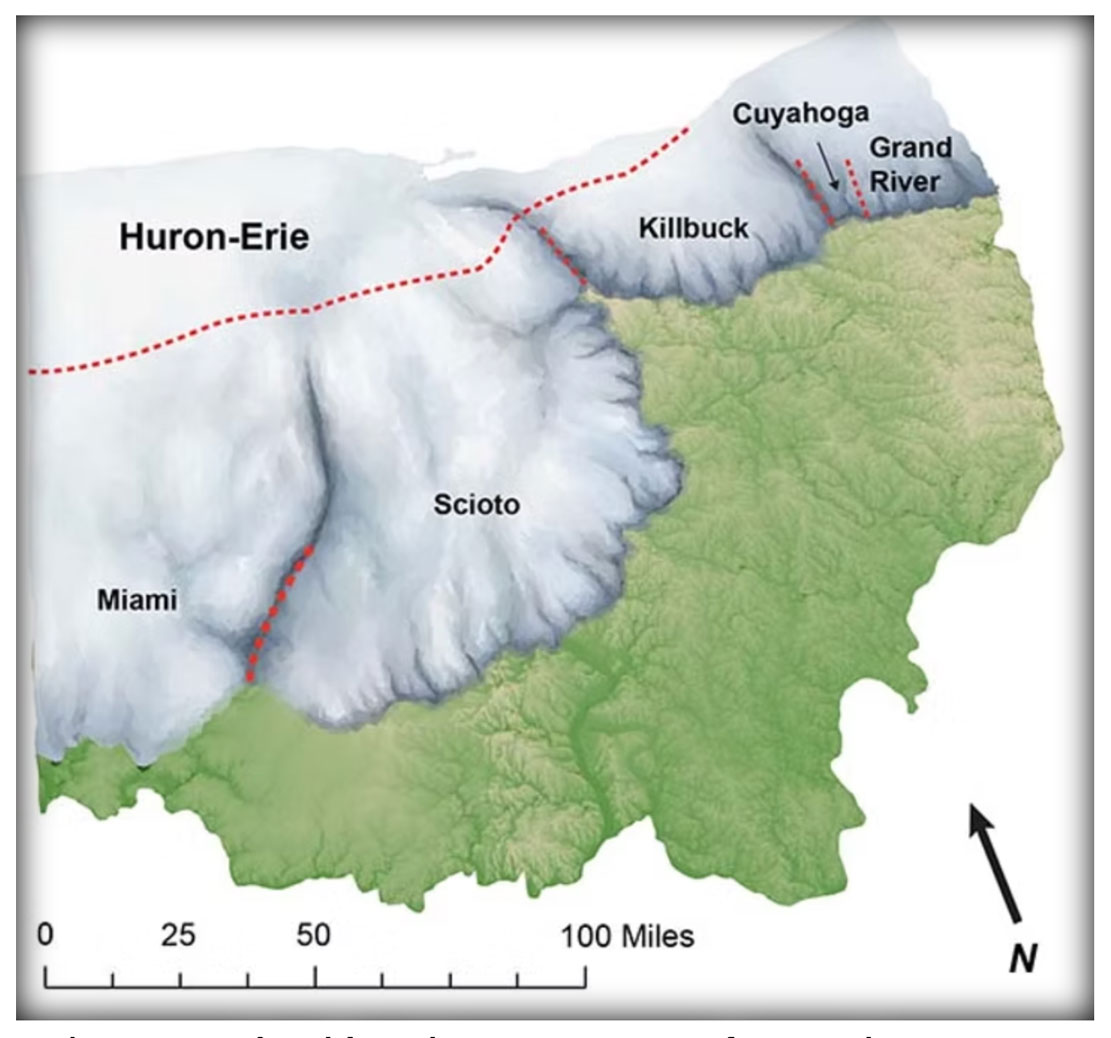
The last glaciers of our North American Ohio land, known as the Wisconsin Glaciation, extended across the continent in great lobes of ice. The Clear Fork Gorge of Mohican country would be located in this diagram in the pocket between the Scioto and Killbuck lobes.
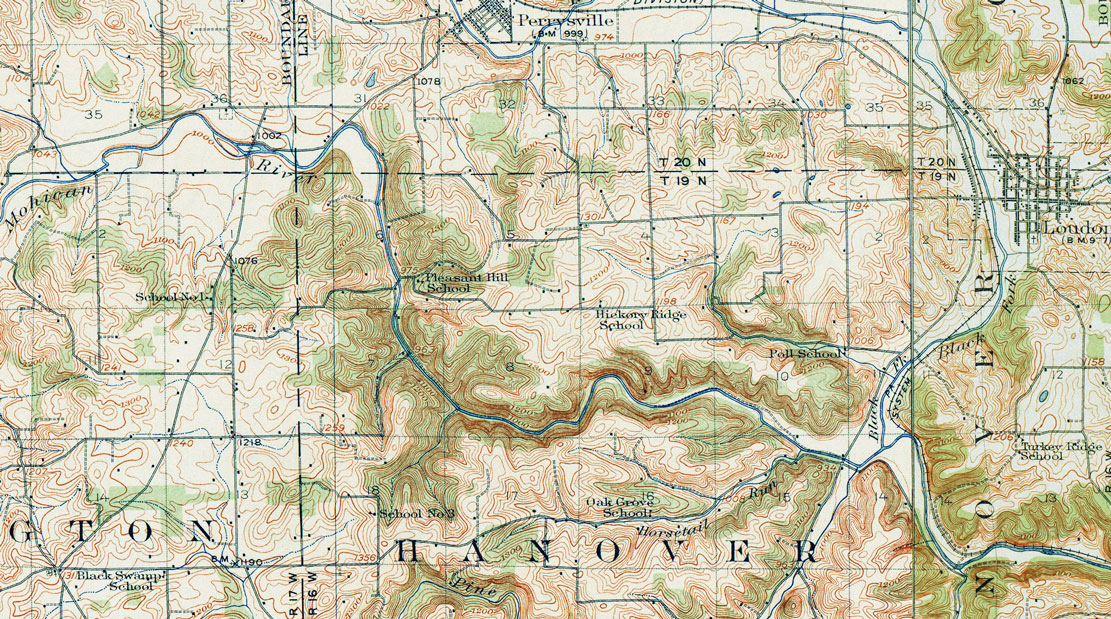
The Clear Fork Gorge is clearly evident in this 1912 U.S.G.S. topographical map of the Perrysville quadrant. The closer the rust-colored lines, the steeper the terrain.
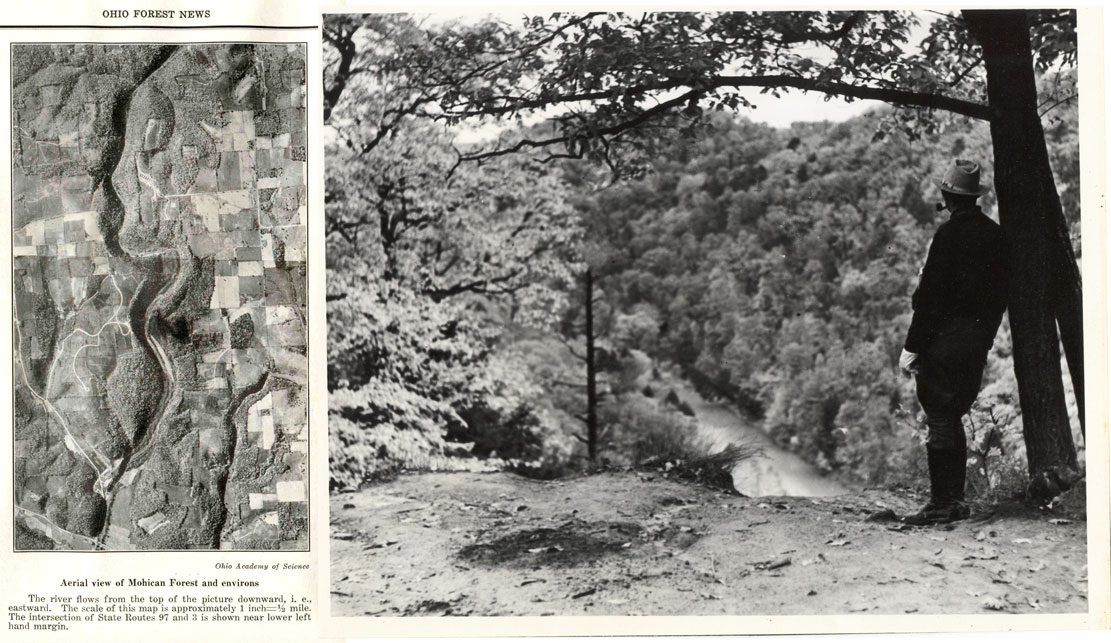
These photos from the Ohio Forest News, July 1938, show the Clear Fork Gorge of Mohican from different views.
HISTORIC NAMES:
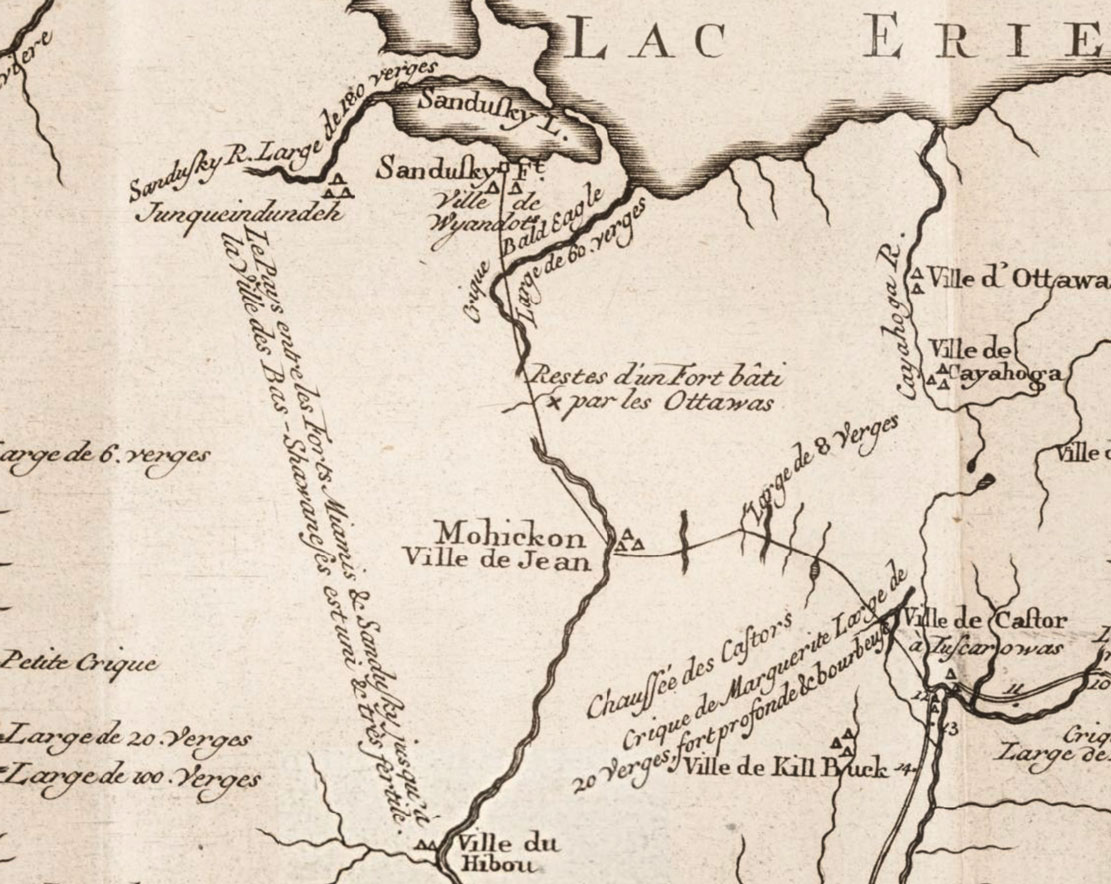
Long before Richland existed as a County, or Ohio was conceived as a state; before America even had its Revolution, and we were still British: our river was already designated as Mohican. This map in a book printed in Amsterdam in 1769 clearly indicates where the Mohican named John established his village on what was later to become a Fork of the river named for him. I’d like to know what he called it.
This map is so early in the European apprehension of our wilderness that whole days’ journeys are designated only by the number of unnamed rivers that had to be crossed.
That line running through John’s village toward the northwest is the Great Trail- today Rt 603.
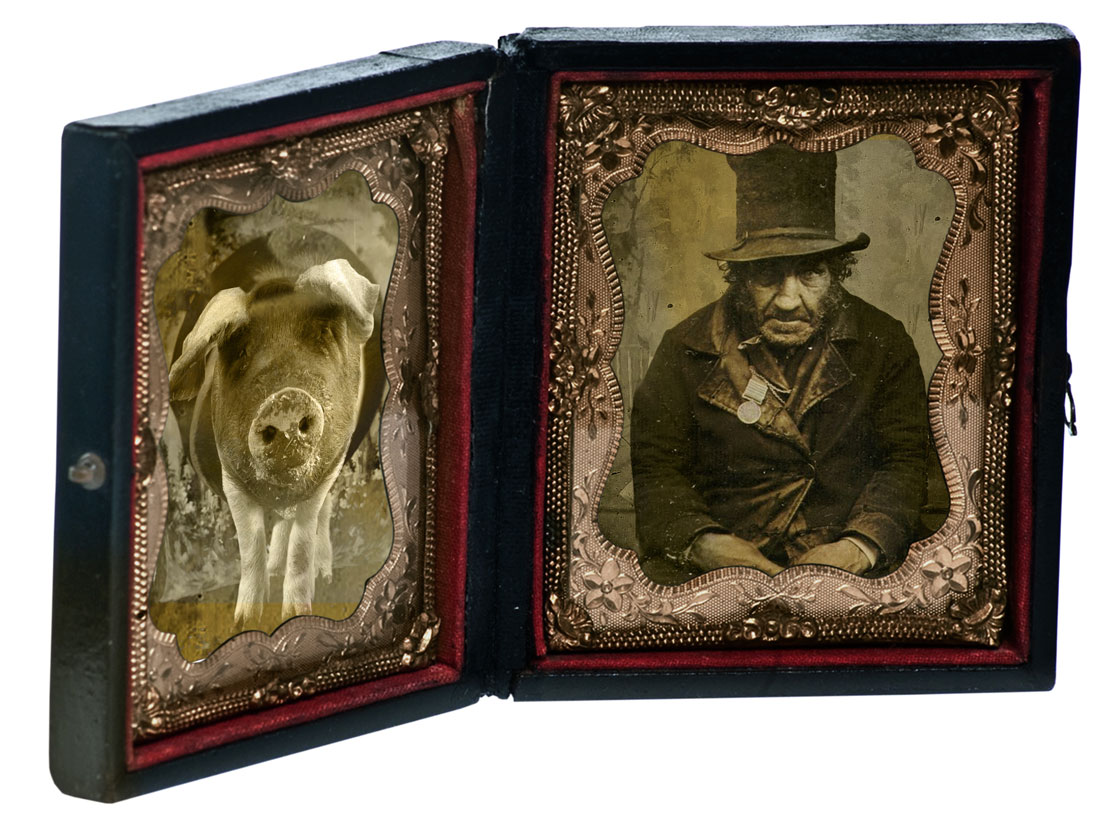
The legend of Hog Hollow was first recorded in the pages of the Mansfield Herald in the 1850s, long before it was given official U.S. sanction in CCC paperwork and signage. It is a heartwarming adventure tale about the love between a man and his hog.
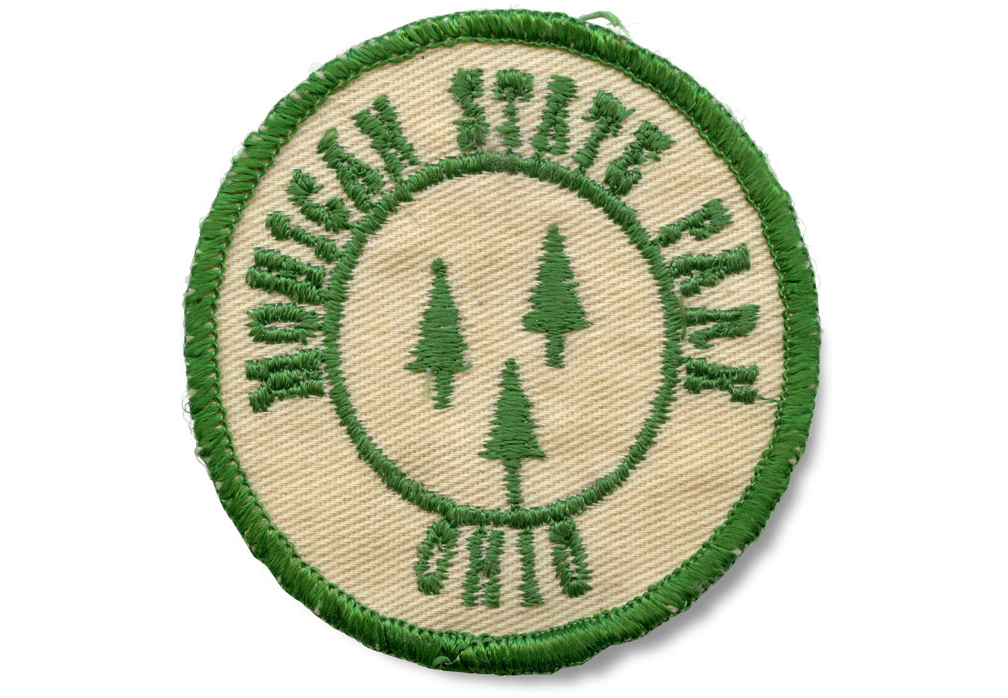
MOHICAN MEMORIAL FOREST & MOHICAN STATE PARK:
This is from Mohican’s earlier and humbler days in the 1940s when they had only, um, three trees.
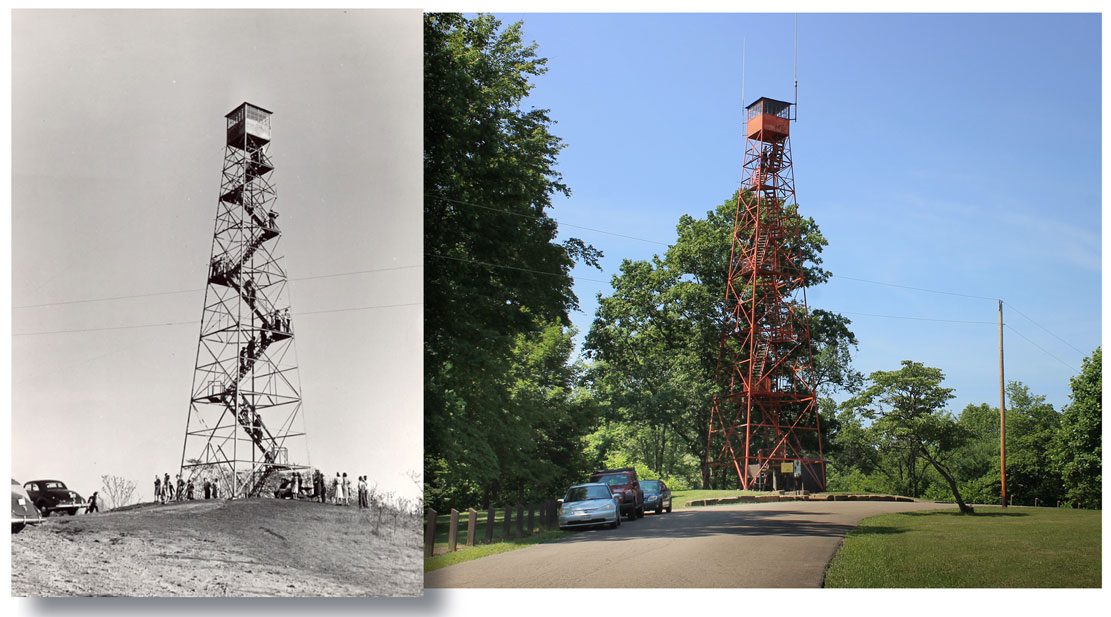
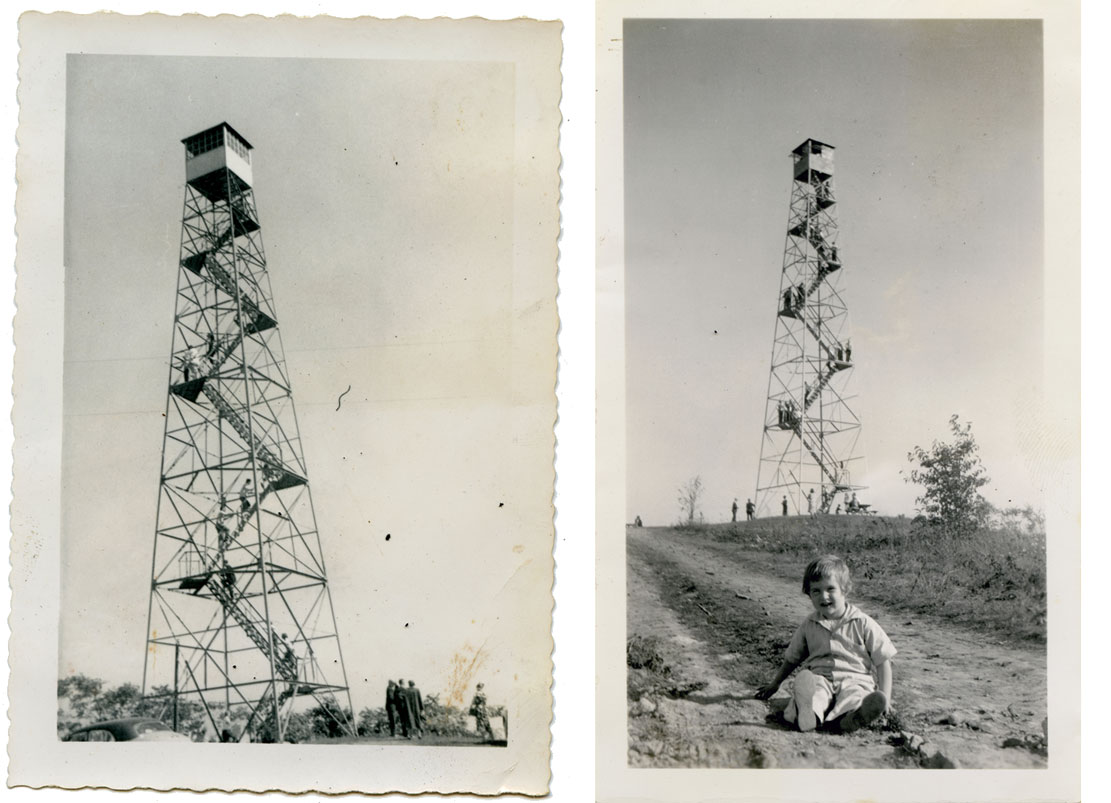
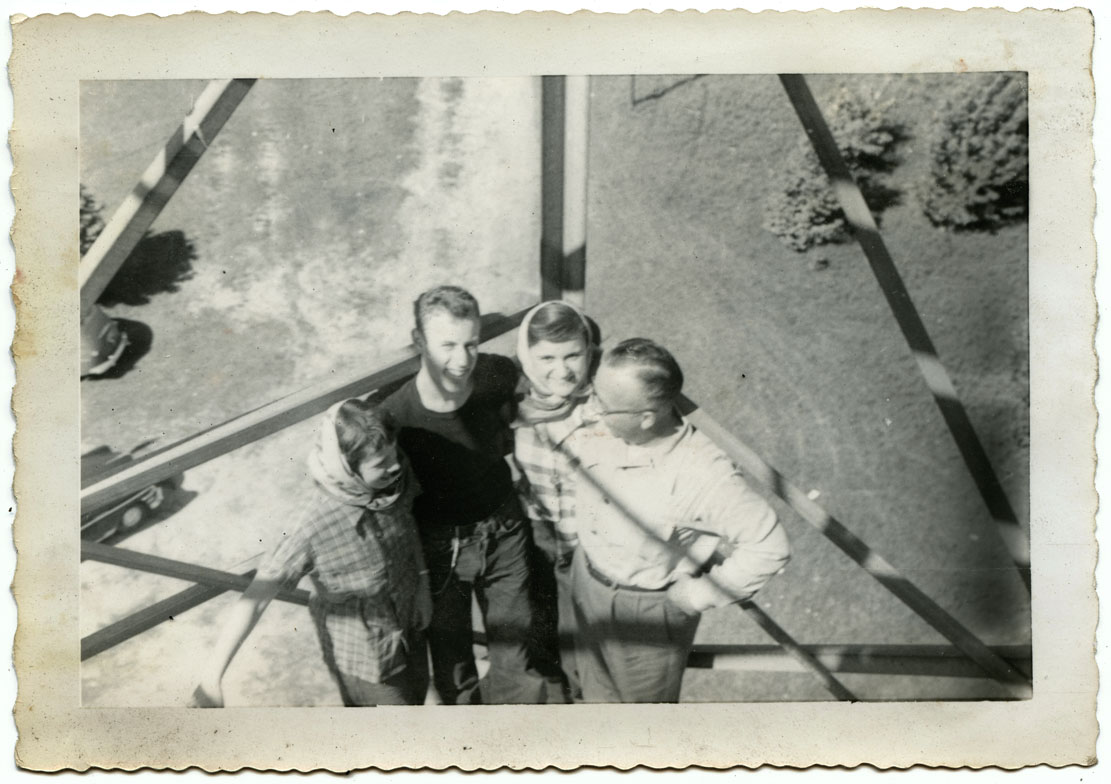
The Fire Tower is well documented through the decades in the scrapbooks of countless tourists:
Then & Now: 1940 and 2022.
The Herbert family posed in 1950 halfway up the stairs.
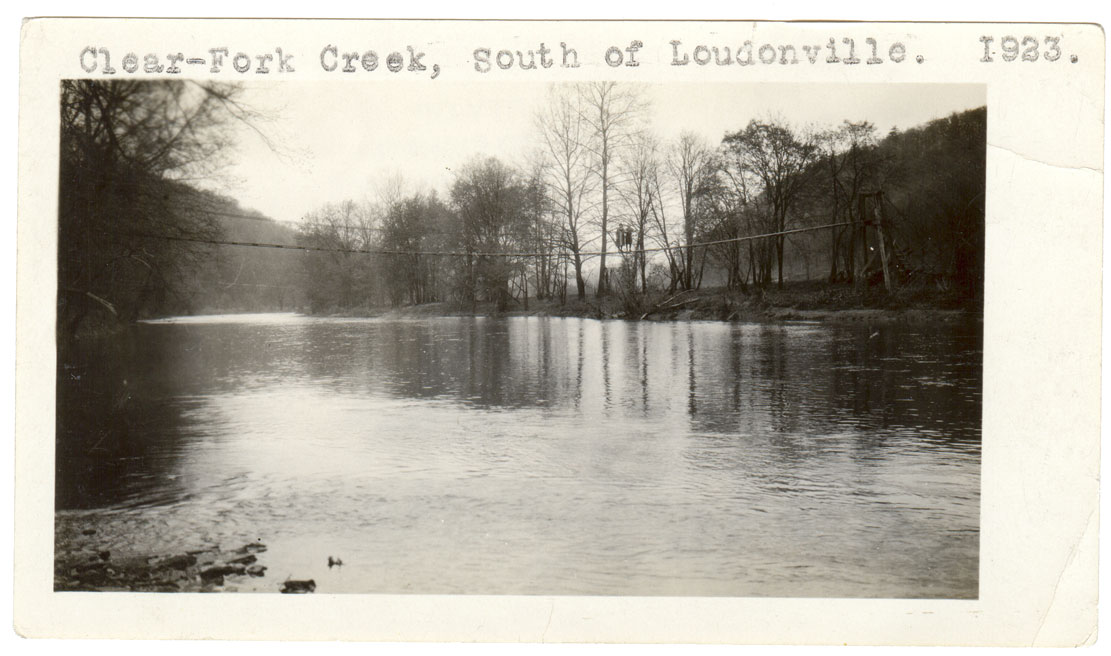
The current Suspension Bridge crossing the Mohican in the Clear Fork Gorge, built in 2021, was said to approximately replicate one built in 1939. This photo from 1923 suggests its history goes back considerably farther, perhaps as early as the 1890s-1910s during the great tourist days when a number of Swinging Bridges were built across the Clear Fork and the Black Fork.
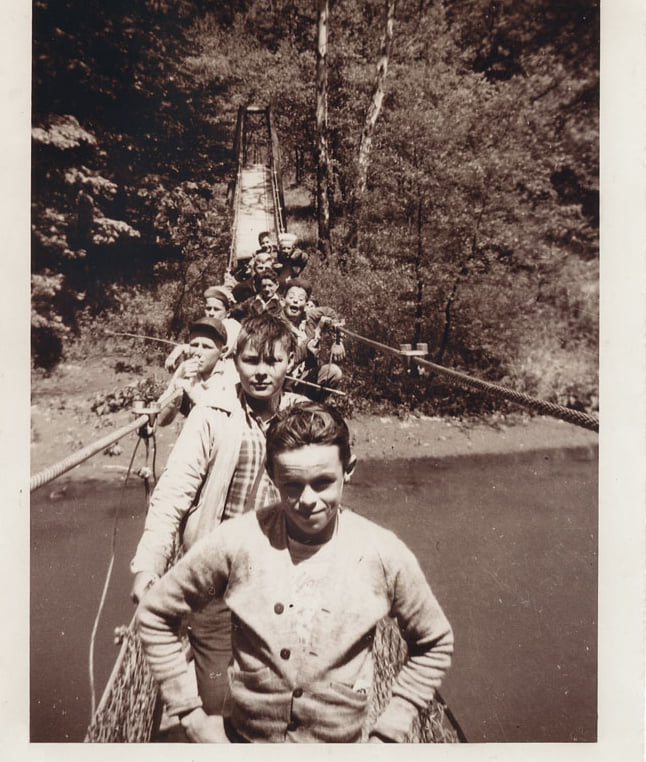
Yesterday I was talking with Bob Carter and somehow we got to the topic of Mohican and the new swinging bridge. He was quick to remind me that the swinging bridge is not a new thing.
He asked if I wanted to write about it but I said it was no fun doing history with only words: there needs to be a picture for the words to talk around. It took him a while to get out of his chair, but he tottered across the room to find a binder, and then he handed me this photo.
That is Troop 1 of Lexington crossing the Mohican on the swinging bridge in 1949. And that’s Bob at the front of the line.
PLEASANT HILL DAM:
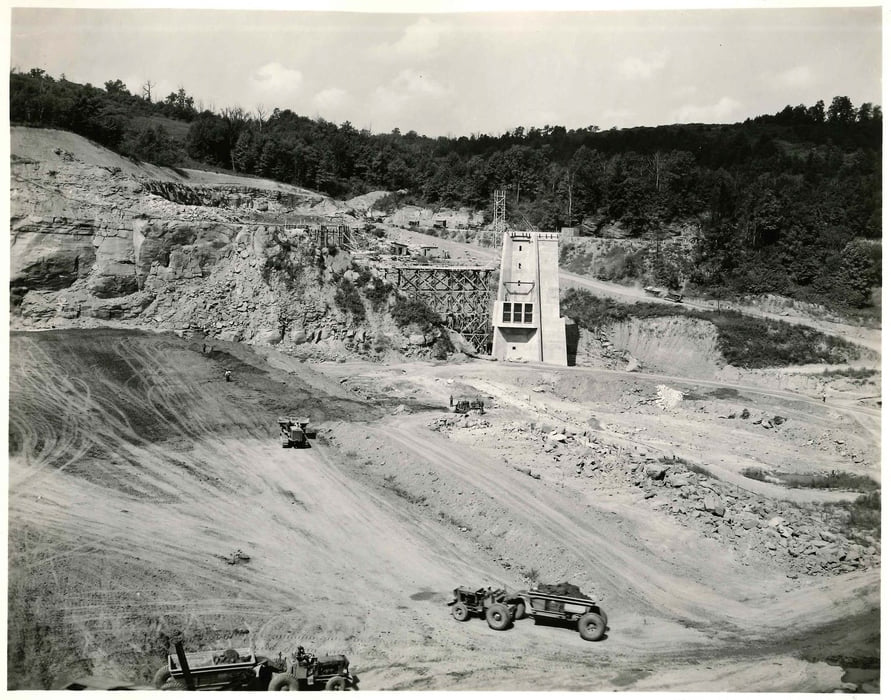
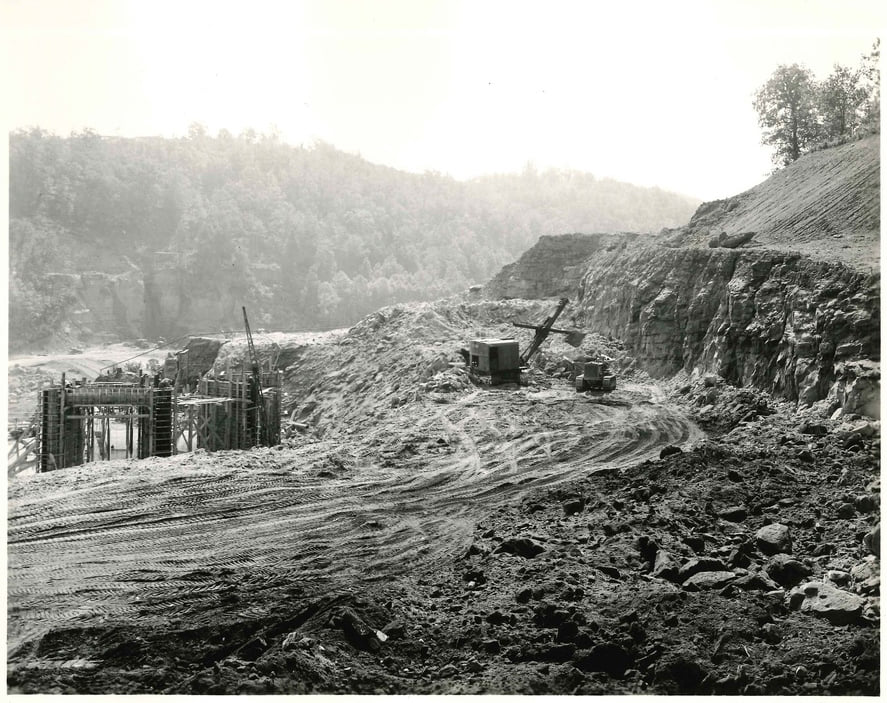
Walking on the Pleasant Hill dam today, with a kind of reverence for ancient bones of the Earth jutting from the hillsides, it became obvious how comparatively new the earthworks of the dam are—even though the 1930’s concrete is cracked and showing its age like intricate lines on the face of an old man.
Being surrounded by such a monumental edifice that so timelessly juxtaposes nature and humanity, makes it easy to slip out of the timeline continuum and stand in this same place nearly 90 years ago.
It could be 1937—and men in the distance are undaunted in re-defining the planet. I’m seeing the vast scope of imagination and devotion to industrious optimism necessary to every soul at work on this epic undertaking.
What was strange in that transcendent moment—I realized that the primary gulf between me standing here today and witnessing the ‘30s wasn’t time and culture, but something else entirely: the ethereal presence of color.
Somehow you always have this idea that if you really were able to go back in time—say to the 1930s—that the sites you see would be in black & white.
It’s strange to think of those men working on a day like today with wistful thin sun, when the breeze is tinted by spring and the sandstone is rusty orange, and the horizon a soft color of threadbare denim.
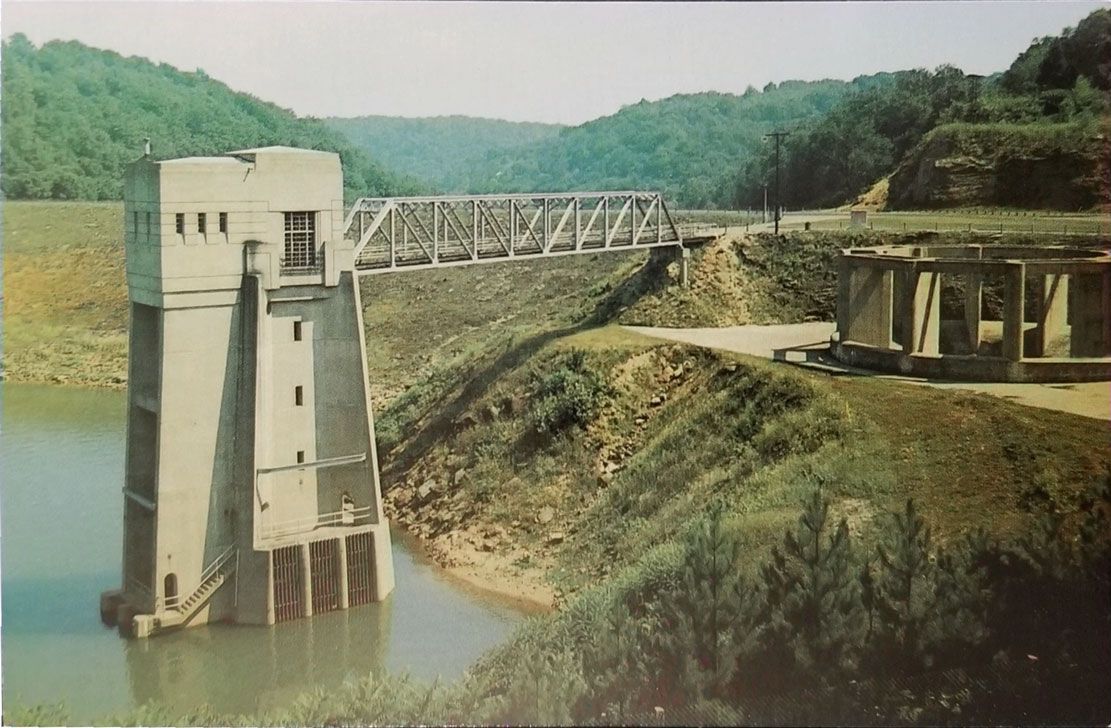
Postcard view of the Pleasant Hill Dam from the 1950s.
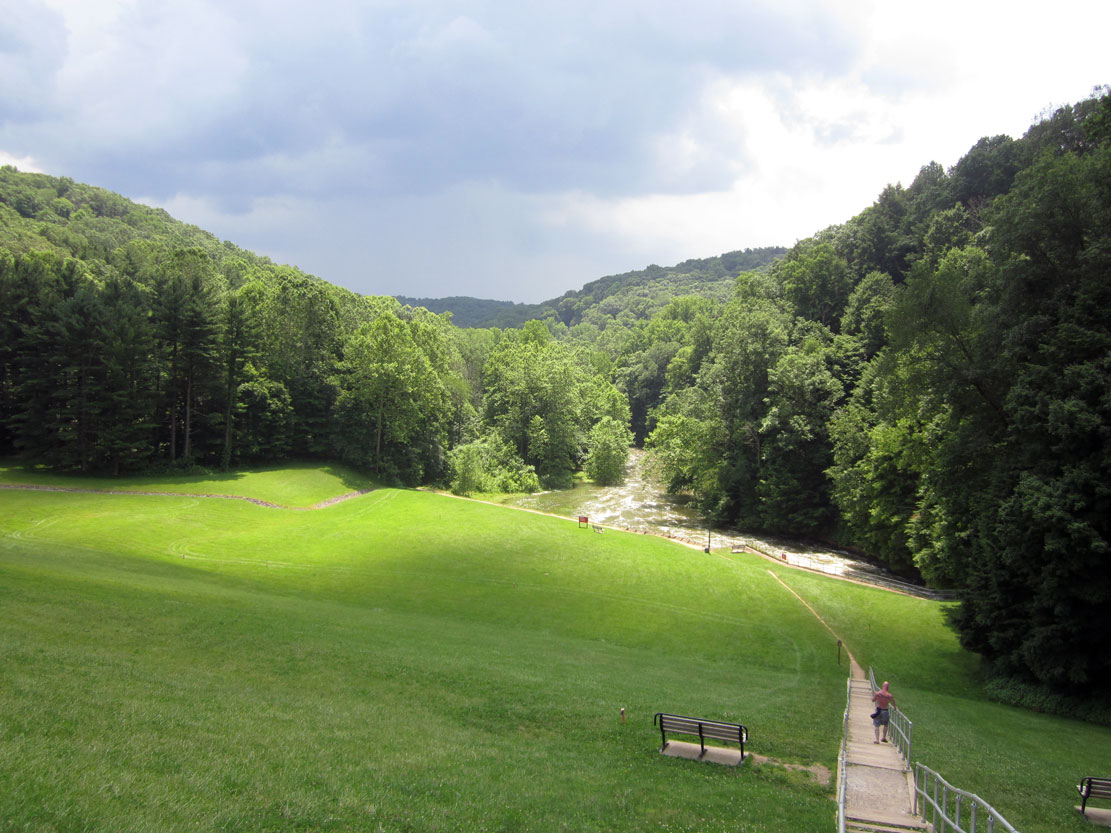
When I was 13, our troop camped every month near the lake, so in the wintertime we used to sled down this hill: it is the backside of Pleasant Hill Dam. We tried it one day in the afternoon and it was such a blast we went back that night to do it again in the patchy moonlight.
There is much about this experience that was totally unforgettable: you could barely make out shadows racing downhill against the white snow; and hear the echoes of distant screams as riders leaped off their sleds before divebombing into the river.
But what I remember most about the adventure was seeing sparks fly in the dark as our sleds ricocheted off the dam rocks.
Covered Bridge
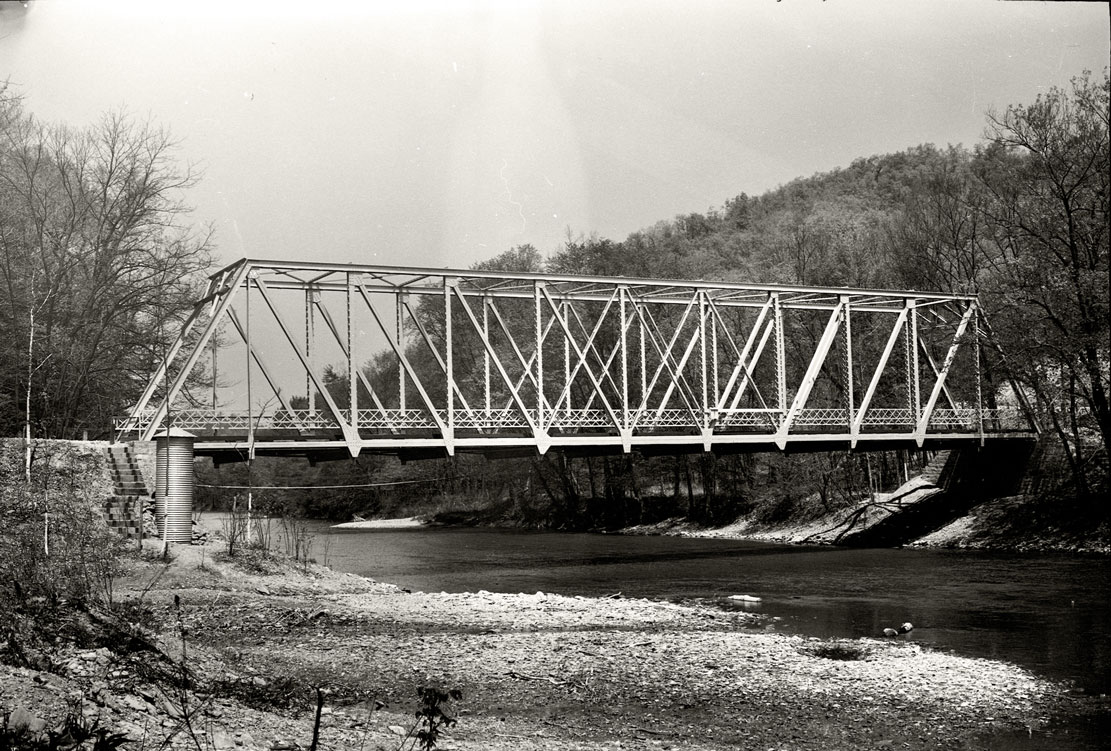
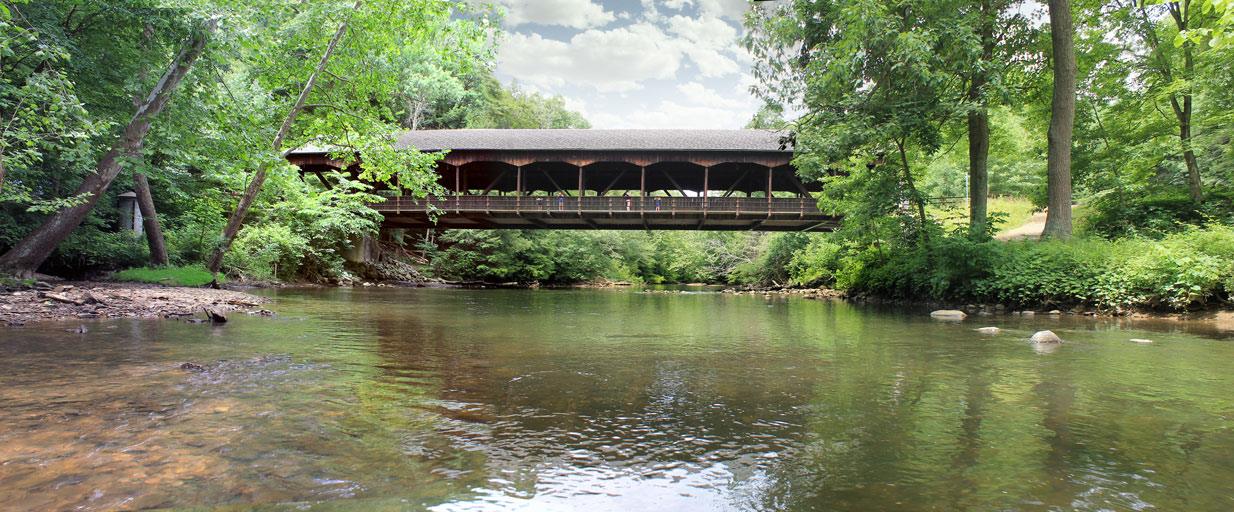
Before there was a Covered Bridge in the Clear Fork Gorge, built in 1969, the Mohican was crossed at the site by this trestle bridge. It was moved by CCC men down the river from Newville before that village was abandoned for Pleasant Hill Lake. Those columnar bridge abutments from the 1930s can still be found in the woods not far from the Covered Bridge.
The clouds were cruising so slowly that the light was continually dodging colors back and forth, and I had to stand in the middle of the Mohican for nearly an hour until the scene balanced. I could do it every day, with or without the camera.
OUR SACRED TRUST
On the days when I need proof outside myself that the world lives up to the effort it requires to remain here, all I have to do is go to Mohican. It is the simple range of green to blue hallowing the valley, that reconnects me to the planet; and I stay until I remember once again why Earth is my home.
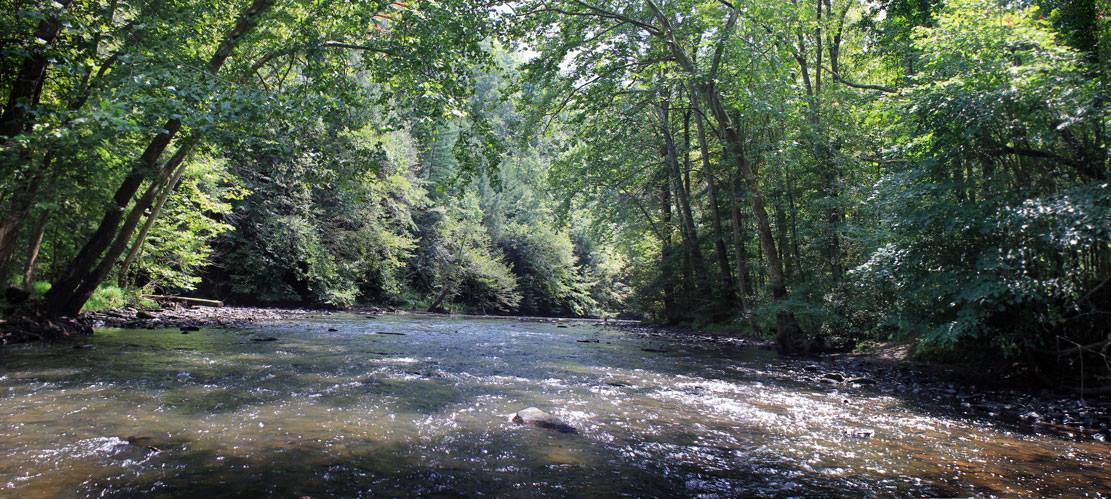
If you walk down the river from the covered bridge far enough, until the path becomes little more than a deer trail, there is place where the Mohican drops about three feet in a couple hundred yards. The sudden descent creates a rapids that are so shallow, the water resonating through the narrows makes the sound of a soft shhhh… It’s like the earth saying, shhh, its ok; you can be quiet for a while.
If you stand in the middle of the rapids and face the shore, the upstream sounds a slightly higher tone than downstream; and the stereo rinsing of it through your head carries away all the thoughts that have no substance.
A few minutes of it is transformative; you can leave a human being. an hour makes you a saint or a poet.
Thank You
Images and information in this article come from a number of sources, including Alex James, the Ohio Department of Natural Resources: Division of Forestry, BobCarter, Don and Dave Robinson, Jay Herbert, Eric Miller and Mohican Advocates, Farm Security Administration: U.S. Department of Agriculture, and Steve McKee.